
The COVID-19 pandemic impacted people’s health, livelihood, infrastructure and access to essential goods and resources. Social purpose organisations (SPOs) represent the less empowered billions who had little or no agency to overcome these unprecedented hurdles to sustain themselves. The challenges these SPOs needed to address suddenly became additionally complex. The Post-Graduate Program in Development Management (PGP DM), developed and carefully curated by the Indian School of Development Management, is a pioneering program for social sector aspirants. The design, curriculum and pedagogy of the PGP DM keep pace with the dynamic needs and managers that developmental work and SPOs require in this post-pandemic world.
The post-pandemic world calls for SPOs to look at their work through a systems lens with a novel approach. The ecosystem has become exceedingly dynamic, with rapidly changing needs and processes. These ground realities call for a program that responds to the development sector’s emerging needs. While similar courses and pedagogies in the development sector give development professionals a sound theoretical foundation, ISDM’s program in Development Management approaches these issues through evolving pedagogy and sector responsive modules. They help create managers and leaders who are adept at rising to the occasion in difficult situations and aim to deliver social impact at a population scale.
Development Management and leadership is the answer for SPOs in the post-pandemic world.
What is Development Management?
Development Management brings together the two domains of management principles and development praxis with a foundation in universal human values of equity, compassion, and justice. The endeavour is to create a whole new ecosystem of ideas, individuals, and institutions driven by adequate and appropriate development leadership and management practice. Development Management attempts to pioneer the capacity-building of development professionals through various means to achieve the goals of India’s social purpose organisations across the country. It aims at enabling practitioners to plunge into understanding complex societal issues, design appropriate strategies, build relevant networks with state and market stakeholders, and work with them collaboratively based on that understanding.
ISDM’s vision is to nurture a cadre of professionals with adequate knowledge, the ability to engage with complex systems, and a reliable professional and ethical code of practice. The PGP DM trains practitioners to analyse, interpret and apply a development lens to managerial theories, principles, and procedures, enabling them to understand the contextual realities and complexities to respond by developing sustainable solutions.
A Glimpse into the Post-Graduate Program in Development Management
The 47-week program is divided into eight terms. The curriculum is built on the contemporary thinking in management education as advocated by Srikant Datar, Garvin and Cullen, who proposed a proper balance between knowing, doing and being as essential in management.
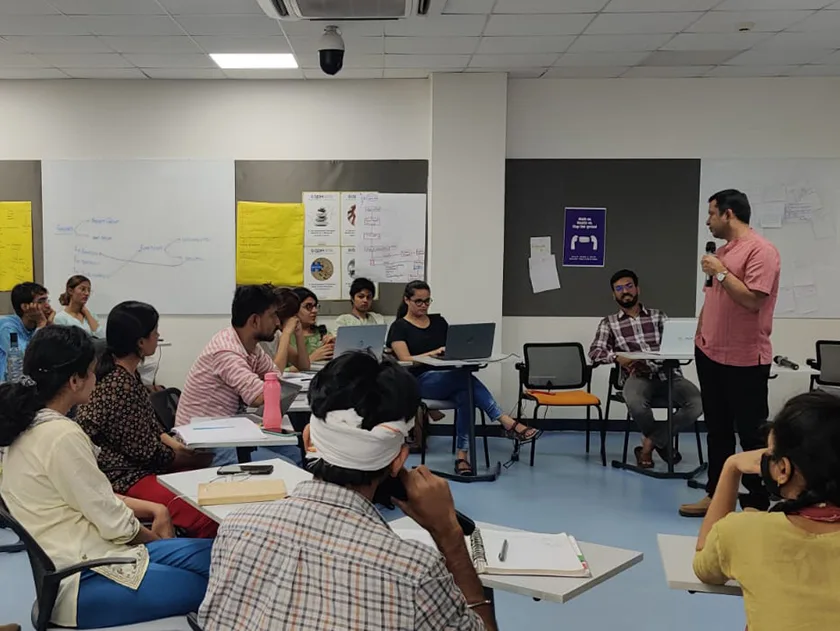
The program redefines learning as a model of reflective engagement over a year-long period of experiential learning rather than mere cognition. Keeping this approach in mind and bringing development and management principles together, this program has been designed by renowned academics from both the development and management sectors.
What sort of courses will you study in a Development Management Program?
The curriculum is divided into 22 customised offerings to enhance managerial efficiency and promote leadership effectiveness in SPOs. It addresses building research for development, managing results and impacting people’s lives. It encourages executive talent development and management for financial sustainability through the appropriate choice of management core courses and electives. Students undergo courses in Financial Perspectives, Strategic Innovation for Social Change, Operations Management for Quality and Impact, Behaviour Change Communication and Marketing Management. If that weren’t enough, students would also be introduced to Human Development in an Unequal World to Technology and Management, Corporate Social Responsibility, Behavioural Sciences in Social Change, Digital Marketing and Social Entrepreneurship.
Why should you choose Development Management?
A program like the Post-Graduate Program in Development Management will –
- Make you adept at deep diving into understanding complex societal issues
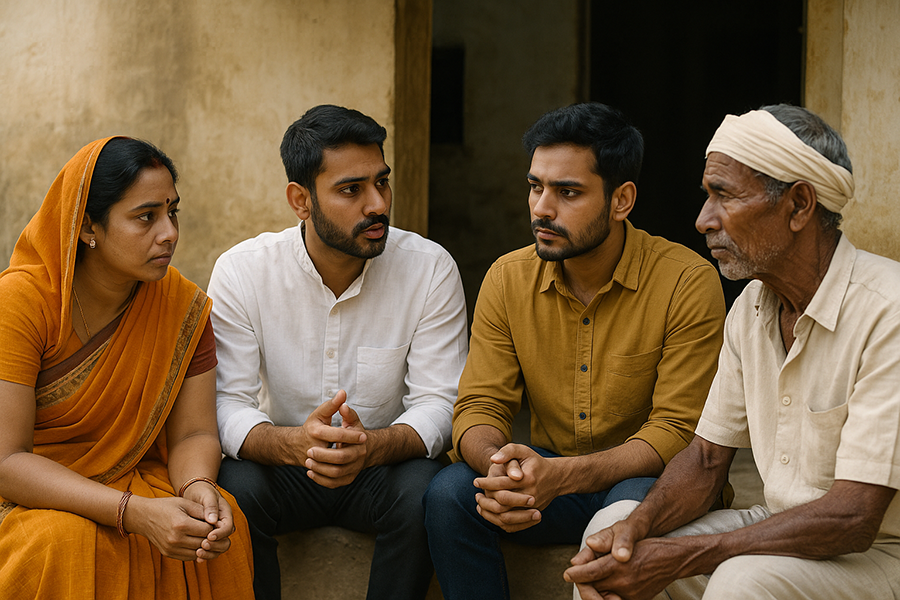
As a development professional, you will be working hand-in-hand with communities laden with systemic and cultural issues. You will need to develop the ability to understand and work within these contexts of complexity, sensitivity, and great uncertainty. You will learn that there could be multiple, equally intricate, and complex pathways to finding appropriate solutions to benefit the community and scale impact. - Enable you to design appropriate strategies and interventions in addition to building impactful organisations
As a leader, you need to build world-class organisations with the appropriate strategies, structure systems, processes, and culture. You will do all of this, keeping in mind the context you work in and simultaneously focusing on the design, implementation, evaluation and monitoring of these appropriately designed social interventions. Your professional management skills will range from effective communication, critical thinking, data interpretation, problem-solving, analysis, synthesis, and the application of management theories in the development sector. - Empower you to work adeptly with both state and market stakeholders
Development in a progressive social, economic, and political climate involves the interaction of the State, Markets and Civil Society, the three key pillars. SPOs do not work in isolation as they join hands with the government and other funding organisations to extend their reach. They can provide critical funding, the infrastructure, and the heavy lifting needed to expand and scale-up growth. This will require leadership to wear multiple hats and still ensure that you continue to deliver sustainable social impact at scale by creating relevant partnerships. - Transform you into a reflective practitioner who leads SPOs to create sustainable and scalable impact
Throughout the program, you will be trained to value diversity, believe in universal human values, demonstrate professional management skills and knowledge, and understand complexities while engaging with compassion. You will become a reflective practitioner who will recognise the collaboration of state-market and societies in bringing about sustainable change at the population scale.
The vision is to create development leaders who can set the direction for social change and develop ripples as they influence others to join the cause. At least 230 ISDM alumni are doing their bit in creating impact at scale across India’s social purpose organisations! What are you waiting for?


