
The Power Of Data For Impact

CDSSI conducted research culminating in a two-part report titled ‘The Power of Data for Impact’. Part I discusses data-driven practices in the social sector; Part II focuses on enablers facilitating data adoption. Events included panel discussions with experts on leveraging data science for social impact. Read the event reports below:

Understanding data use in the social sector

CDSSI’s research into data and data science usage led to a multi-part report titled ‘The Power of Data for Impact ’, followed by two panel discussions.

CDSSI’s research into data and data science usage led to a multi-part report titled ‘The Power of Data for Impact ’, followed by two panel discussions.

The Power of Data for Impact

To explore how the social sector leverages data and data science, CDSSI conducted a research project, culminating in a two-part report titled *The Power of Data for Impact*.
*Part I

The first part, *A Study of Data-Driven Practices & Solutions in the Social Sector*, offers practical insights and examples of how social purpose organisations (SPOs) use data to drive large-scale impact. It was launched on February 28, 2024, during the online panel ‘Data Science for Social Impact,’ where experts discussed how data enhances organisational outcomes.

*Part II

The second instalment, *The Power of Data for Impact, Part 2: An Overview of Data Enablers in the Social Sector*, focuses on the factors enabling SPOs to adopt data-driven solutions. Released on May 24, 2024, in Bengaluru, it featured a panel discussion on the role of enablers in fostering social change.
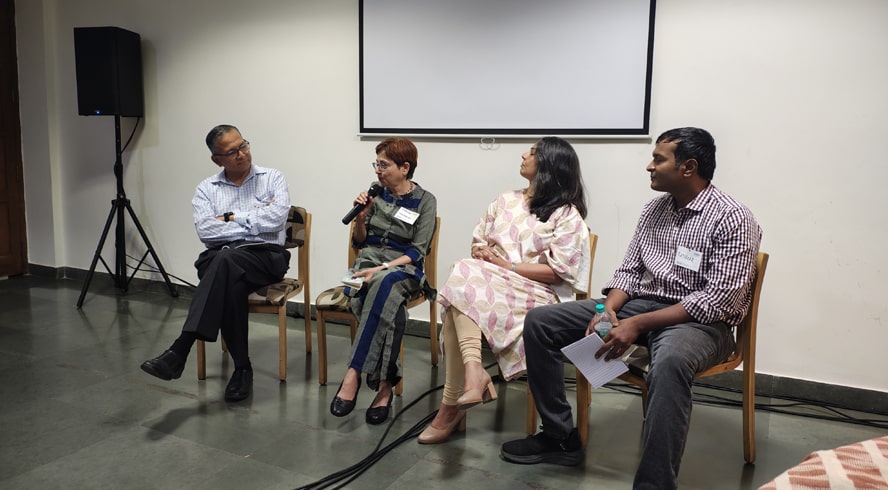
During the virtual ‘Data Science for Social Impact’ event, 75 attendees participated in two panels that explored how SPOs apply data science to improve impact. Experts like Karuna Raina (Save Life Foundation) and Uday Adavi (George Institute) highlighted the use of AI and machine learning (ML) to enhance health outcomes and SPO performance. Akhil Rokde (Tata Trusts) discussed real-time data monitoring using digital dashboards.

The second panel, featuring Soma Dhawala (Wadwani AI) and Sairaj Reddy (Karya), emphasised maximising impact through reusable data-driven solutions. Reddy noted AI’s potential to streamline educational tasks, saving teachers’ time through automation platforms like WhatsApp.

Enablers in the Social Sector

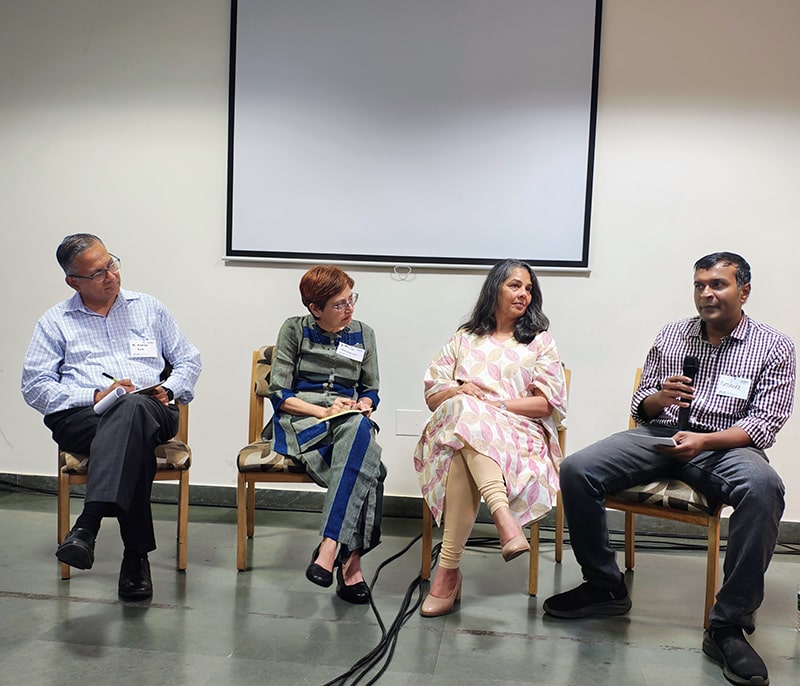
On May 24 2024, CDSSI held a second panel discussion on ‘The Role of Enabling Organisations in Driving Social Change’ at the SAIACS CEO Centre in Bengaluru. This panel discussion centred on the second part of the report, and focused on different enablers and the support they can offer to SPOs.

The panel was moderated by Dr Anand Rao (Professor of Data Science and AI at Carnegie Mellon University; Chairperson of CDSSI Advisory Council), who began the discussion by trying to understand what drove the panellists to help SPOs use data better.

The panellists included Manije Kelkar (Founder of Goalkeep), Sandhya Vasudevan (Grants Committee Member at SVP), and Rajsekar Manokaran (AI/ML Consultant at DigitalGreen). As enablers, they had insightful pointers on how they can support data-driven practices in the social sector. “As a non-profit implementation person, it was frustrating that we didn’t look at our own data. When organisations collect information, they often think of it as something they need to report externally or demonstrate impact rather than as something they can learn from,” said Kelkar.
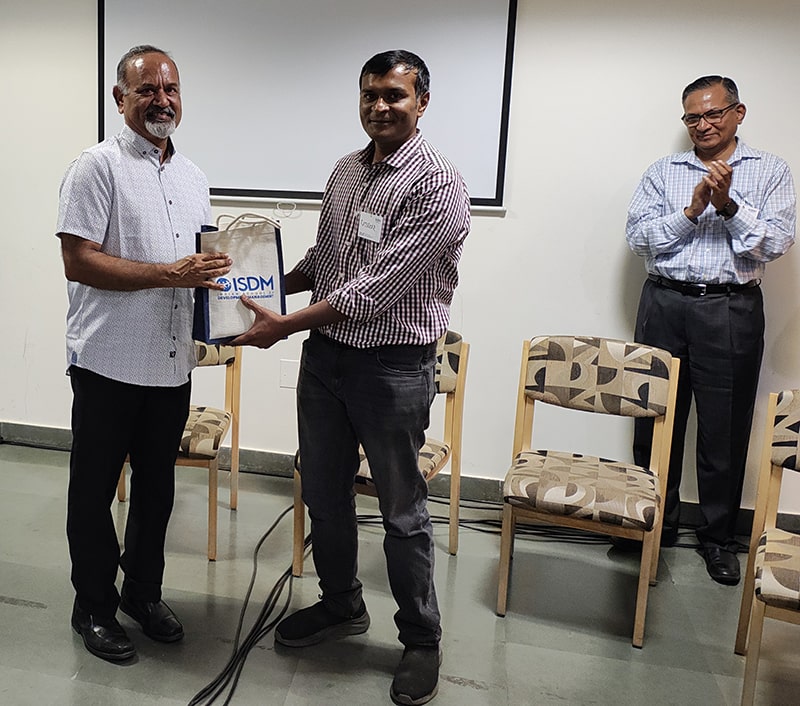
The panellists also shared actionable recommendations for SPOs. “SPOs should reach out to public forums where they can get in touch with enablers. They should also make the problem statements more open. People shouldn’t have to come to the organisation to know what the problem is,” said Manokaran. Vasudevan agreed with this statement and followed it up by saying, “SPOs should define the problem. You’ll have people coming to solve it for you.”
Harnessing The Power of Data in the Social Sector

The panel discussions and report releases were steps towards expanding upon the existing knowledge of data within the social sector, and sharing best practices for data utilisation. However, they are just the starting point for CDSSI’s objective, which is helping SPOs leverage the power of data. By sharing knowledge and use cases, CDSSI wants to foster a culture of data-driven decision-making in the social sector. As more organisations adopt these practices and take the help of resources available to them, it will pave the way for efficient organisations in the development sector that deliver meaningful impact.

Author(s) :

ISDM CDSSI

Contact Author : cdssi@isdm.org.in
Yes

Get in touch with authors

No ratings yet

Rate this article

Yes

Key topics

Data Science for social impact

Also found in

Share

Join Our Newsletter

Explore More Articles

Paper / Report

Rethinking Impact: From Metrics to Meaning – Convening Report

How do we move beyond measuring impact as a reporting requirement to using it as a tool for learning, decision-making, and long-term change? This report captures the key discussions, insights, and emerging ideas from Rethinking Impact: From Metrics to Meaning, a convening that brought together funders, practitioners, researchers, evaluators, and development professionals to examine the future of impact measurement in India. Anchored around the launch of the Rural Development Impact Framework (RDIF) and the Development Management–Social Impact Measurement and Management (DM-SIMM) approach, the convening explored how the sector can better understand contribution, centre community perspectives, align funding with the realities of social change, and create measurement practices that support learning over compliance. The report synthesises the conversations, key takeaways, and actions that can help build a more thoughtful and effective approach to understanding impact.
Blog

Development Management: Genesis, Rationale, and the Foundations of an Emerging Discipline

Development Management (DM) arises at a junction that neither development studies nor mainstream management fully occupies on its own. Development thinking has traditionally concerned itself with what change is desirable and for whom, while management thinking has concerned itself with how collective effort gets organised and executed.
Paper / Report

A Methodological Framework for Assessing the Long-Term Impact of a Nonprofit’s Work in a Geography

This report presents the Rural Development Impact Framework (RDIF), a methodological approach for assessing the long-term impact of nonprofit organisations working within a geography. Drawing on realist evaluation, the framework shifts the focus from short-term, project-level attribution to understanding how sustained organisational engagement contributes to social change over time. Using PRADAN’s work in Gumla (Jharkhand) and Dhamtari (Chhattisgarh) as case studies, the research combines qualitative, quantitative, and geospatial methods to examine how interventions interact with local contexts to generate change. The study demonstrates that long-term impact emerges through the cumulative strengthening of livelihoods, institutions, collective agency, and governance systems, offering a practical framework for evaluating organisational contribution to rural transformation.
Paper / Report

DM-SIMM: A Funder’s Guide to Reflect, Learn, and Act on Social Impact

Across the social sector, impact measurement is often reduced to reporting numbers, meeting donor requirements, and proving results. In the process, opportunities for learning, adaptation, and meaningful decision-making are frequently lost. This guide explores how funders can rethink Social Impact Measurement and Management (SIMM) to prioritise continuous learning over compliance. Drawing on research, practitioner insights, and real-world examples, it offers practical ways to make measurement more useful, participatory, and responsive to the realities of implementation. The guide highlights the critical role of funders in shaping incentives, creating space for reflection, and enabling organisations to act on evidence. Ultimately, it presents a vision of impact practice that helps organisations learn, adapt, and stay focused on the change they seek to create.
We use essential and analytics cookies to operate this website and understand how visitors interact with it. As this site also functions as a login identity provider (IDP) for other ISDM portals, some cookies are necessary to enable secure authentication. By continuing to use this site, you consent to our use of cookies.