

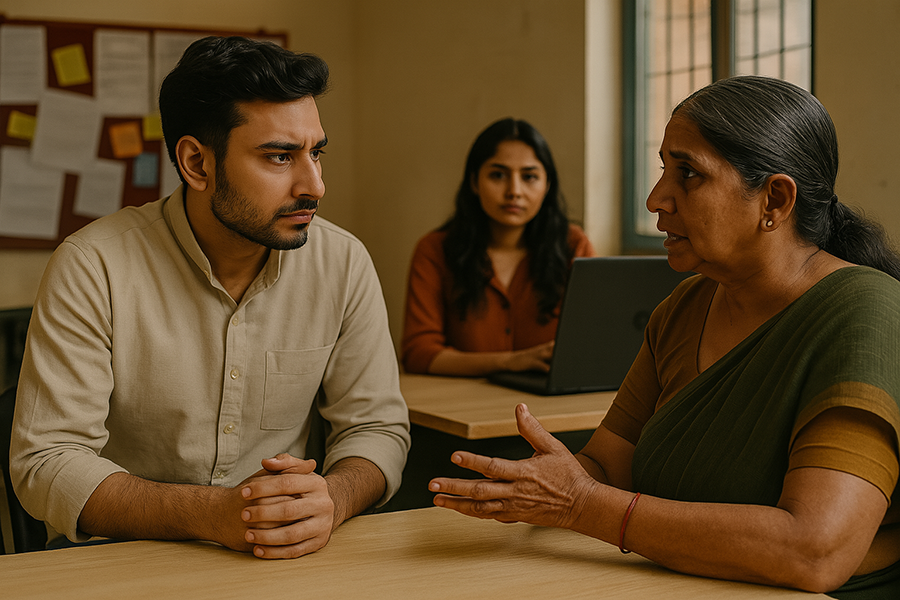
In the heart of Alwar, Rajasthan, I unraveled a stark contradiction to the narrative of a caste-neutral society, debunking the myth that this region was free from the clutches of caste inequality, an eye-opening revelation from my district immersion as part of the ‘Realising India‘ program.
The Illusion of Equality
Expectations shattered as I witnessed the pervasive subtleties of discrimination in Alwar during my two-week rural immersion. The facade of gender equality crumbled as women, burdened with domestic chores and fieldwork, were denied decision-making rights, reflecting the entrenched patriarchal norms. The Meena tribe-dominated village, Thanaghazi, once heralded as affluent and egalitarian, exposed its disparities. Affluence was confined to a handful of households, leaving others in the shadows of poverty, lacking access to essential services.
Spatial Segregation: A Silent Divide
Walking the streets of Revali, an industrial village, the coexistence of Dalits and upper castes seemed harmonious on the surface. Yet, a closer look revealed a spatial caste-based separation, manifesting as a ‘Harijan basti.’ This physical divide reflected not only economic disparities but also the deep-seated discomfort among Dalits regarding inter-caste dining, unraveling the normalization of discrimination.
Muslims in Alampur: Economic Choices Echoing Discrimination
Alampur, a Muslim-majority village, unfolded another layer of discrimination. Cattle rearing, the primary income source, showcased a subtle bias against cows. The preference for buffaloes over cows stemmed not just from economic considerations but hinted at cultural biases. This preference, echoing larger societal norms, underscored the need for a systemic and cultural shift to break free from discriminatory practices.
Reflections on Discrimination: The Unseen Enemy
These experiences shed light on the insidious nature of normalized discrimination, often overlooked amid more overt forms of bias. The legitimacy of socially-perpetrated norms poses a more profound challenge, capable of transcending generations. Franklin Roosevelt’s four freedoms – freedom of worship, expression, freedom from want, and from fear – underscored the imperative for a cultural metamorphosis to eradicate deeply rooted constructs like caste, class, gender, and religion.
Challenging the ‘Normal’: Upholding Constitutional Values
In confronting these subtle biases, a significant hurdle lies in the normalization of discrimination. Workplace scientists advocate labeling covert discrimination as overt to curb these biases. Despite being deemed ‘normal,’ discrimination finds no sanctuary in the constitution, urging us to uphold constitutional values and guard against its justification.
A Call to Action
The evolution of India requires a collective dismantling of ingrained biases and discriminatory practices. The journey towards a more equitable society demands a reevaluation of cultural norms and an unwavering commitment to constitutional principles. The ‘Realising India’ initiative serves as a catalyst for uncovering these layers of inequality and instigating change.
The ISDM Imperative
In navigating the intricate tapestry of societal challenges, the Indian School of Development Management (ISDM) emerges as a guiding light. As we strive to realize India’s potential, ISDM’s commitment to nurturing change agents, equipped with a holistic understanding of societal issues, becomes paramount. The need for transformative education, transcending traditional management teachings, is evident. ISDM stands poised to contribute to the evolution of a socially conscious and equitable India, echoing the spirit of ‘realising India’ in every aspiring change agent it nurtures.


