

Unveiling Transformation in Morena’s Heartland
In the heart of Morena District, Madhya Pradesh, a metamorphosis is quietly underway. Amidst the rustic landscapes and cultural tapestry of the region lies a narrative of empowerment, resilience, and hope. This tale, born out of the ‘Realising India’ program by the Indian School of Development Management (ISDM), transcends the ordinary to spotlight an unsung hero and his extraordinary impact on the marginalized Bedia community. Join me on this journey to uncover how Taekwondo is becoming a catalyst for change, as we explore the life of Mahesh and the transformative possibilities he unfolds.
Mahesh: A Beacon of Change in Morena
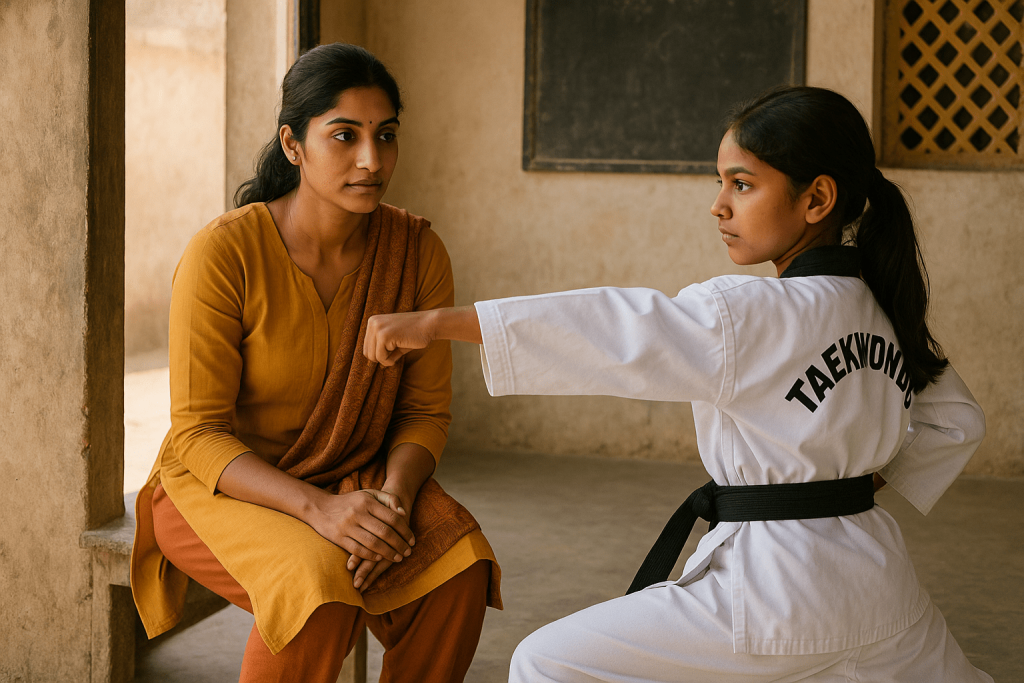
Our narrative commences within the walls of Mahesh’s Taekwondo academy, where two young girls exhibit remarkable skill, a testament to their instructor’s unique approach. Mahesh, not merely a teacher but a harbinger of change, shares glimpses of his life during our conversations. Despite modest earnings at a local school, Mahesh’s commitment resonates beyond financial realms. A Taekwondo black belt holder with a global footprint, his journey unfolds against the backdrop of medals and certificates that narrate tales of triumph.
A Progressive Vision
As we delve deeper, Mahesh’s progressive and scientific approach to teaching emerges. His advocacy for innovative methods and a shared responsibility between teacher and child transcends conventional boundaries. What makes Mahesh’s story remarkable is his lack of formal training, relying solely on experiential learning to shape his teaching strategies dynamically.
Breaking the Chains of Patriarchy
Mahesh’s academy emerges as a beacon of hope for the Bedia community, especially young girls shackled by societal norms. His affordable services provide alternatives, disrupting grim trajectories and offering choices beyond early marriages or involvement in prostitution. Even within the constraints of an orthodox community, Mahesh champions change with methods aligning with established organizations, showcasing the transformative power of grassroots efforts.
Resistance and Resilience
As the story unfolds, we encounter the resistance faced by Mahesh’s initiatives within the Bedia community. Seen as a threat to cultural norms, Mahesh rejects external opportunities, choosing instead to catalyze change from within. His wife, a living testament to his values, actively participates in this ‘life-saving’ art form, reflecting the resilience of a family dedicated to making a positive impact.
A Family’s Dedication
Amid challenges and limited social security, Mahesh rejects external opportunities, remaining rooted in the community. Throughout the pandemic, his family grapples with ration shortages, yet Mahesh’s commitment remains unshaken. Instances of community letdowns and lack of support haven’t deterred him from his selfless work, demonstrating an unwavering commitment to uplifting his community.
The Recognition Gap
Despite transformative efforts, Mahesh’s contributions often go unnoticed within the community. Only his students truly understand the profound impact of his efforts. Despite challenges and setbacks, Mahesh continues to sow seeds of change, providing unimaginable possibilities for the children of the Bedia community.
The Unseen Contributions: Recognizing Grassroots Impact
While Mahesh’s efforts might not receive due recognition within the community, the transformative impact on his students speaks volumes. This recognition gap underscores the often-overlooked yet invaluable role of grassroots initiatives. Mahesh’s influence extends beyond the academy, providing the children of the Bedia community with a renewed sense of possibilities and a chance to break free from societal constraints.
In the face of cultural resistance and limited social security, Mahesh’s dedication to his community becomes even more commendable. His rejection of external opportunities in favor of catalyzing change from within showcases a rare resolve. The challenges faced by his family during the pandemic highlight not only the adversities but also the strength that sustains Mahesh’s unwavering commitment to his selfless work.
Mahesh’s story is not just about teaching Taekwondo; it’s a testament to a global mindset seamlessly integrated into local landscapes. His progressive teaching philosophy challenges traditional norms, proving that impactful education doesn’t always require formal training but thrives on experiential wisdom. Mahesh’s commitment to empowering the Bedia community transcends mere physical training; it delves into reshaping societal narratives and breaking the chains of patriarchy.
Nurturing Change Beyond Boundaries
As we navigate through Mahesh’s journey, it serves as a call to action. It prompts us to reflect on the transformative power of education and community-driven initiatives. The untold stories in India’s heartlands are not just narratives; they are blueprints for change. ISDM, through programs like ‘Realising India,’ plays a pivotal role in nurturing change-makers who comprehend the nuances of India’s developmental challenges and actively contribute to sustainable, community-centric solutions.
Shashvi Thakur, through ISDM’s Realising India program, unraveled the inspiring narrative of Mahesh, underscoring how education, determination, and community-driven initiatives can catalyze change. This tale reflects ISDM’s commitment to nurturing leaders who comprehend the nuanced challenges of India’s developmental landscape and actively contribute to sustainable solutions.
**All names have been changed to protect identities.


