


Ecosystem Study: Benchmarking talent management in Indian social sector

The study on Benchmarking Talent Management in Indian Social Sector, seeks to understand how the Social Impact Sector approaches ‘talent’ and ‘compensation’ to help key stakeholder groups address the challenges around organisational talent. The research aims to examine ‘what is’ in terms of the current talent management practices in the sector and attempts to lay the foundations of ‘what it ought to be’ in terms of the principles or norms that need to be developed for the emerging sectoral ecosystem.The…

The study on Benchmarking Talent Management in Indian Social Sector, seeks to understand how the Social Impact Sector approaches ‘talent’ and ‘compensation’ to help key stakeholder groups address the challenges around organisational talent. The research aims to examine ‘what is’ in terms of the current talent management practices in the sector and attempts to lay the foundations of ‘what it ought to be’ in terms of the principles or norms that need to be developed for the emerging sectoral ecosystem.
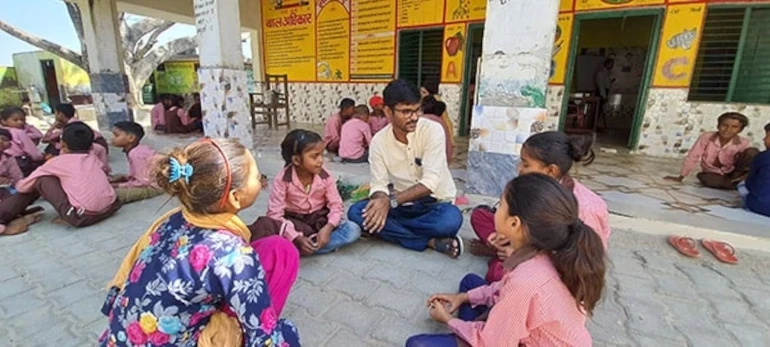
  • The study will enable leaders in the Indian Social Sector to build strategies conducive to the talent management needs of their organisations.
  • Findings will include compensation benchmarking with reliable data on compensation trends for different roles across organisational archetypes, geographies, and thematic areas of engagement.
  • The study report will facilitate the emergence of a professional, data-informed, and transparent ecosystem of knowledge commons on talent management for the Indian Social Sector.
  • The study will enable social purpose organisations, philanthropists, foundations to create a conducive environment to attract, nurture and grow appropriate talent in the Indian Social Sector.
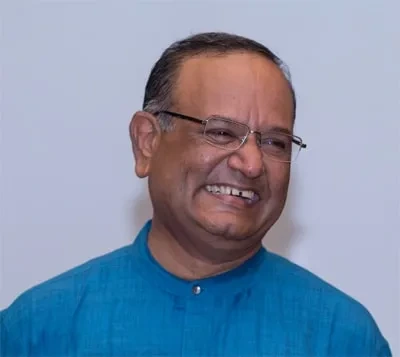
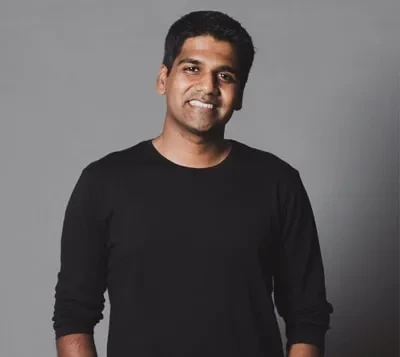
Mr. Ravi Sreedharan, Co-Founder and PresidentISDM, shares “ISDM is thrilled at the initiation of the first-ever attempt to build a shared knowledge infrastructure on Talent Management in the sector. 

This study is vital for the social impact sector to establish and have access to knowledge commons that guide and inform management practices in SPOs. There is an urgent and underlined need for greater synergies in the way that a sector as wide and disparate as the social impact space understands and works on managing its most vital capital. We are sure that the compensation database and knowledge resources that the study makes available will be of immediate and long-term use to thousands of SPOs all of whom are grappling with managing and retaining talent in the present crises where funds run low, but our work needs greater impact.

The scope of the study extends to the entire landscape of Indian Social sector including Civil Society Organisations/NGOs and Philanthropic Foundations and a range of other types of organisations such as Social Enterprises, Impact Investment Firms, CSR arms of Corporates, Consultancy Organisations, think tanks, support service providers and the likes.

Speaking of the study, Ajit Sivaram, Co-founder (U&I) said, “How does one create an equitable format in compensation? Even if I

try, it means going and researching another 20 pay scales and again, where do I find them? So really, your study is the answer to our prayers. We are glad someone is doing the hard work and we can sit back and enjoy the ride!”

In the past decade the sector has witnessed a surge in demand for a variety of skill-sets, an influx of cross-over talent from other sectors, heightened competition for talent as well as new expectations and benchmarks around compensation in particular. The benchmarking exercise shall provide a set of actionable recommendations along with a searchable database for job roles and compensation for key sector stakeholders.

“Somewhere this(social) sector is considered as a bunch of do-gooders and not necessarily a vast pool of highly qualified professionals. Various entities in the sector were individually spending double digit lakhs in compensation benchmarking studies when really, we should be able to count on a sector resource.  University.

That was the impulse that guided ISDM and us (CSIP) to create what is in effect a public good for the sector. The study also helps showcase the width and the range of talents that the sector today houses and is increasingly looking for in terms of skill sets.” – Ingrid Srinath, Director – Centre for Social Impact and Philanthropy (CSIP), Ashoka

This study is a joint initiative of Indian School of Development Management (ISDM) and Centre for Social Impact and Philanthropy (CSIP). KornFerry and Sattva Consulting are execution partners of the study.

Each participating organisation shall also receive:

  • An ‘internal equity and external competitiveness’ report specific to their organisation.
  • An opportunity to contribute their organisation’s experience to the series of case studies on ‘drivers of talent’ in the Indian Social sector

If your organisation would like to participate in the study, please register here: https://bit.ly/2UfPxpY

To know more about the study, see:Talent Management in Indian Social Sector | ISDM

Scan to participate:

Author(s) :

Priti Dargad and Leena Sushant

Yes

Get in touch with authors

No ratings yet

Rate this article

Yes

Key topics

Education and Skill Development, Social Justice, Philanthropy and Human Rights

Also found in

Share

Join Our Newsletter

Explore More Articles

Paper / Report

Rethinking Impact: From Metrics to Meaning – Convening Report

How do we move beyond measuring impact as a reporting requirement to using it as a tool for learning, decision-making, and long-term change? This report captures the key discussions, insights, and emerging ideas from Rethinking Impact: From Metrics to Meaning, a convening that brought together funders, practitioners, researchers, evaluators, and development professionals to examine the future of impact measurement in India. Anchored around the launch of the Rural Development Impact Framework (RDIF) and the Development Management–Social Impact Measurement and Management (DM-SIMM) approach, the convening explored how the sector can better understand contribution, centre community perspectives, align funding with the realities of social change, and create measurement practices that support learning over compliance. The report synthesises the conversations, key takeaways, and actions that can help build a more thoughtful and effective approach to understanding impact.
Blog

Development Management: Genesis, Rationale, and the Foundations of an Emerging Discipline

Development Management (DM) arises at a junction that neither development studies nor mainstream management fully occupies on its own. Development thinking has traditionally concerned itself with what change is desirable and for whom, while management thinking has concerned itself with how collective effort gets organised and executed.
Paper / Report

A Methodological Framework for Assessing the Long-Term Impact of a Nonprofit’s Work in a Geography

This report presents the Rural Development Impact Framework (RDIF), a methodological approach for assessing the long-term impact of nonprofit organisations working within a geography. Drawing on realist evaluation, the framework shifts the focus from short-term, project-level attribution to understanding how sustained organisational engagement contributes to social change over time. Using PRADAN’s work in Gumla (Jharkhand) and Dhamtari (Chhattisgarh) as case studies, the research combines qualitative, quantitative, and geospatial methods to examine how interventions interact with local contexts to generate change. The study demonstrates that long-term impact emerges through the cumulative strengthening of livelihoods, institutions, collective agency, and governance systems, offering a practical framework for evaluating organisational contribution to rural transformation.
Paper / Report

DM-SIMM: A Funder’s Guide to Reflect, Learn, and Act on Social Impact

Across the social sector, impact measurement is often reduced to reporting numbers, meeting donor requirements, and proving results. In the process, opportunities for learning, adaptation, and meaningful decision-making are frequently lost. This guide explores how funders can rethink Social Impact Measurement and Management (SIMM) to prioritise continuous learning over compliance. Drawing on research, practitioner insights, and real-world examples, it offers practical ways to make measurement more useful, participatory, and responsive to the realities of implementation. The guide highlights the critical role of funders in shaping incentives, creating space for reflection, and enabling organisations to act on evidence. Ultimately, it presents a vision of impact practice that helps organisations learn, adapt, and stay focused on the change they seek to create.
We use essential and analytics cookies to operate this website and understand how visitors interact with it. As this site also functions as a login identity provider (IDP) for other ISDM portals, some cookies are necessary to enable secure authentication. By continuing to use this site, you consent to our use of cookies.