

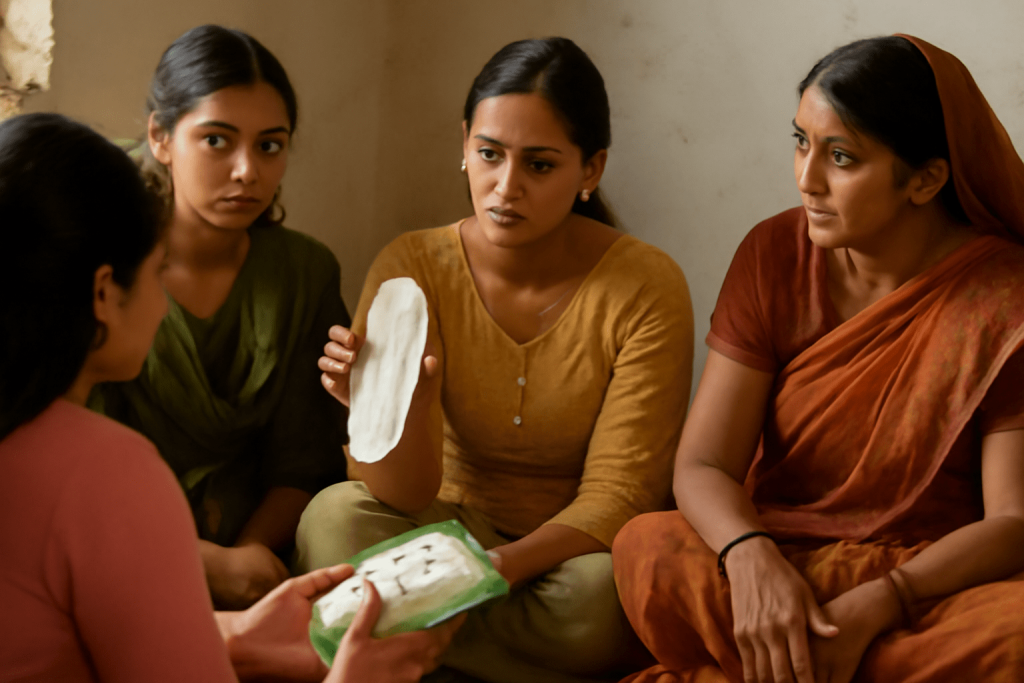
Menstrual leave is a type of leave where a woman has the option to take paid leave from her employer, if she is menstruating and is unable to go to work because of this. The concept of menstrual leave supposedly started in Japan in the early 20th century. History has it that in the 1920s, Japanese labor unions started to demand leave (seiri kyuka) for their female workers. By 1947, a law was brought into force by the Japanese Labor Standards that allowed menstruating women to take leave from work.
There have always been debates around policies regarding women’s rights. Going back into history, women have faced the brunt of Sati. They have also had to fight for issues like the right to cover their breasts in public, the right to widow-remarriage and against other discriminatory practices – many of which still continue in the form of unequal access to education, employment, wage parity in the workplace, etc.
Today, we do have reservations in buses and trains, maternity leaves for six months and so on. But despite all of this, women are also demanding menstrual leaves – a 1-day leave every month, in many cases. But is this really necessary? Can’t they bear with the pain for a few days? These are some of the commonly-asked questions on menstrual leave – and there have been arguments favouring both sides of the coin.
A few weeks ago, I came across an article on menstrual leaves. The first thought I had was: why are women asking for this sort of a leave? They should be able to handle the pain, right? After all, that’s how life is!
But then, I thought to myself – I have never had to experience such a thing, I have never had to bleed every month for 4-5 days. Since I don’t even know how to relate to such a pain, how can I judge the degree of pain a woman has to endure and the capacity she may have to cope with it? To engage with this dilemma, I thought of talking to some of my friends on the topic.
Most of my female friends shared stories of their misery during their menstruation cycle. On the other hand, there were a number of women who said that they didn’t feel any difficulty while going for work during their periods. Considering the dichotomy of opinions, I decided to enquire more about this issue.
Given the fact that I had access to strong views and opinions at the Indian School of Development Management (ISDM), I decided to engage with my peers.
Some of the arguments which came forth against menstrual leave were:
- Difficulty for organisations to create alternative options for getting work done. If women take leaves without prior notice, with periods as a reason, the others in the team and the work they do will suffer.
- With each woman taking a leave once every month, the productivity of the organisation will come down.
- It will re-enforce negative cultural norms. For instance, in certain cultures, during menstruation, women are not allowed to enter particular places, go out of their houses, etc. It is feared that the concept of a menstrual leave will reinforce such negative norms.
- There is always a chance for women to misuse this leave, thereby promoting escapism.
- It’s also likely that organisations may tend to hire more men than women, because hiring women will lead to losses for the organisation, considering the number of days they’ll work.
- There are women who can ignore the pain when they are involved in some physical activity or work. A menstrual leave does not promote this practice of healthy physical activity which many women may get at their workplace.
- Providing menstrual leave may cause discomfort among some men, which may perhaps lead to incidents of workplace harassment.
There were also arguments which supported the provision of menstrual leave policies. They were as follows:
- Menstrual leave does not make women weaker. Men and women are biologically different. A few women may not be uncomfortable during their menstruation. However, accepting this fact should not lead to the exclusion of the majority women who really struggle during their periods.
- Many organisations lack an adequate number of toilets, while some have common toilets for men and women. This makes the situation more miserable for menstruating women.
- Productivity levels actually go up according to the state of mind women have towards their employer.
- Menstrual leave is optional. But it’s definitely an equitable approach, considering the biological difference between men and women.
- It will encourage the participation of more women in the country’s workforce.
- Contrary to popular perception, it will actually reduce menstrual taboos by addressing it. Many women feel uncomfortable even while discussing it. On the other hand, this policy will enable women to ask for menstrual leave.
- Some of the people taking part in the conversation stated that in most cases of women taking menstrual leave from companies, the work is divided equally among the other men and women employees. So, the point that only men suffer seems to be a bit presumptuous and invalid.
- The argument that women will misuse this particular kind of leave also seems to be a bit skewed. In that sense, every leave, including a sick leave, can be misused by men and women. Ultimately, the organisation has to trust the employee that she won’t be taking this leave for her leisure
- A menstrual leave is not a sick leave. Menstruation is not a sickness – it’s a biological function unique to women.
- There are always critics when it comes to policy changes, especially when it comes to women’s rights or an issue as basic as maternity leave. Regarding men who feel uneasy with women being granted menstrual leave, they need to respect the biological differences between men and women – as do we all.
Menstrual leave is controversial because it is seen by some as a criticism of women’s work efficiency or as sexism. However, menstrual leave policies have already been implemented in many places. Countries like Japan, Taiwan, several provinces in China, Indonesia and South Korea have already implemented menstrual leave policies for women.
Nike has also had a menstrual leave policy for its employees since 2007. In India, a couple of companies from Mumbai – Cultural Machine and Gozoop – have decided to provide paid leave for its women employees. Women employees in government services in Bihar can avail two days of leave in a month for this purpose, is in addition to all the other leaves they are eligible to.
Women have always had to plead for her rights from birth – not to get killed in the womb, to get educated, to get jobs and equal pay, to travel safe – and the list continues. I am not sure if the organisational design, especially the leave structure, would have been the same if men menstruated and not women.
Implementing the menstrual leave policy doesn’t take away the pain women suffer. But it will definitely make the work environment more conducive to women.


