
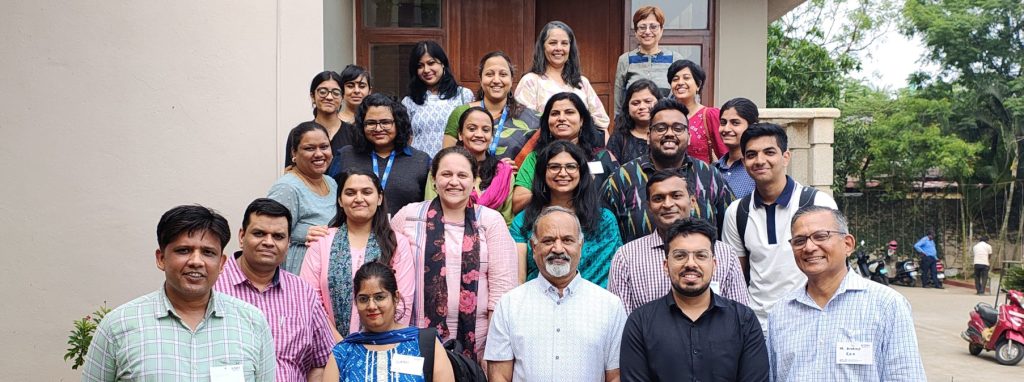
CDSSI hosted the award ceremony for the winners of the first edition of Code4Change (C4C) at the SAIACS CEO Centre in Bengaluru on May 24 2024. The event was the culmination of a month-long hackathon in which over 200 individuals and teams (students, development professionals, and data scientists) had registered to participate.
Five shortlisted teams presented their solutions to a panel of judges. Other highlights from the event included the release of CDSSI’s report, ‘The Power of Data for Impact, Part 2: An Overview of Data Enablers in the Social Sector,’ and a panel discussion on ‘The Role of Enabling Organisations in Driving Social Change’.
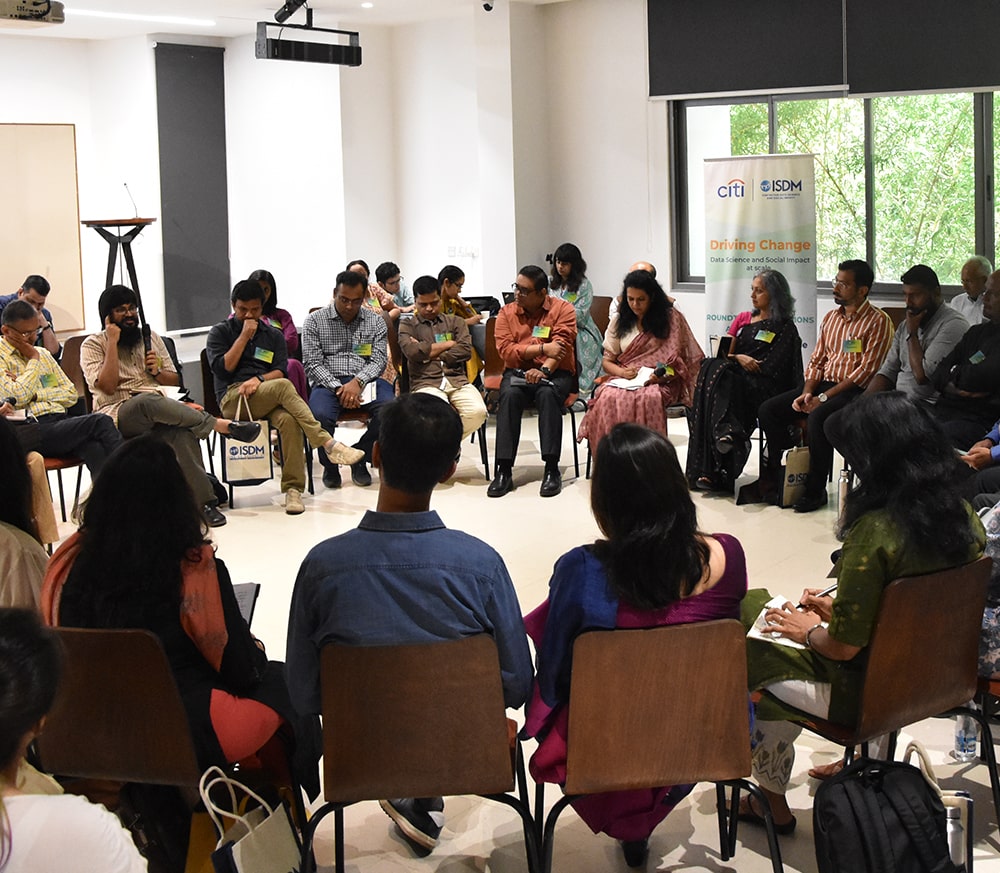
The event, which was conducted in hybrid mode, was attended by 60 people, including funders, non-profit leaders, data science professionals, students, and ISDM staff.
Coding for Social Impact
Code4Change aims to promote the creation of innovative solutions that can help address real-world challenges in the social sector. For this, the first edition, ISDM CDSSI gave the participants a problem statement, “Predicting Financial Vulnerability of Women-headed Rural Households,” and a relevant dataset by People Research on India’s Consumer Economy (PRICE). The participants then had a month to come up with a solution.
From the submissions, the five most impactful solutions were shortlisted. The finalists were Team DevSol4 (Jagannath R, Agrima Sahore, Sidra Ali, and Mallika Bhave from Development Solutions, a MERL+ services-based organisation in New Delhi), EmpowerHer Finance (Ankita Kanawade, Samrudhi Shete, Khushi Padhar, Sanika Kore, and Sanika Borude from Bharathi Vidyapeeth’s College of Engineering for Women, Pune), The Soothsayers (Harshavardhan Shete and Kaustubh Varat from PDAG Consultants & Haryana Urban Development Authority), Balwant Singh Mehta and Siddharth Dhote from the Institute for Human Development, Delhi, and Vivek Sinha from Pradan.
The finalists then had to present their solutions and answer any questions from the esteemed jury, which included Dr Anand Rao (Professor of Data Science and AI at Carnegie Mellon University), Jayita Bhattacharya (Senior Director of Insights & Data at Capgemini), and Mayukh Choudhury (Co-founder of MILAAP).
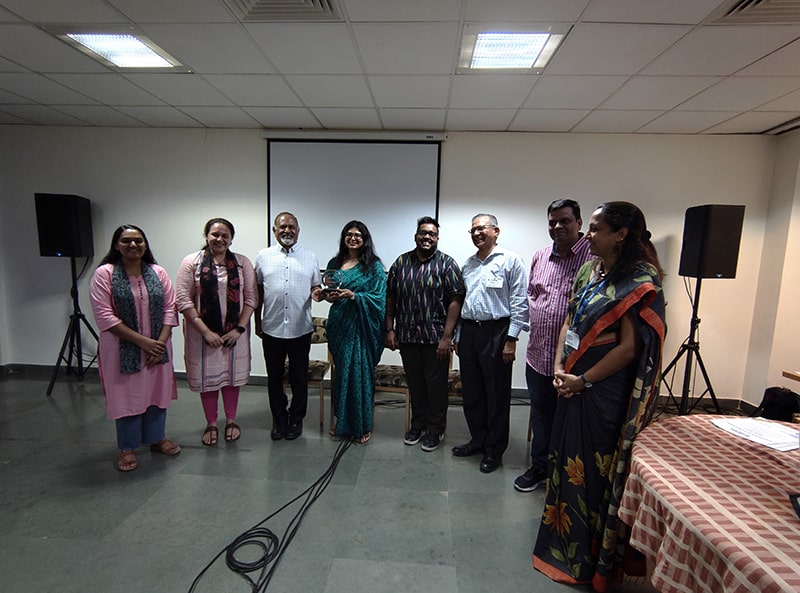
The jury assessed the teams’ solutions on relevance, methodology, data analysis, delivery, and impact, among other factors. After deliberation, they selected Team DevSol4 as the winner. “We chose DevSol4’s solution, a robust financial vulnerability index, as it has a good balance between detailed analysis, relevance to the problems of the social sector, and is actionable. Such solutions will be immensely beneficial for SPOs to optimise their work, improve efficiency, and achieve impact at scale, ” said Dr Rao.
Understanding Data Use in the Social Sector
At the event, CDSSI also released the second instalment of its landscape report, “The Power of Data for Impact, Part 2: An Overview of Data Enablers in the Social Sector,” which examines the various enablers facilitating social change.
The release of the report was followed by a panel discussion on ‘The Role of Enabling Organisations in Driving Social Change’. This convening served as a valuable follow-up to the report’s findings. The panellists were social sector enablers as well – Manije Kelkar (Founder of Goalkeep), Sandhya Vasudevan, Grants Committee Member at SVP, and Rajsekar Manokaran, AI/ML Consultant at DigitalGreen.
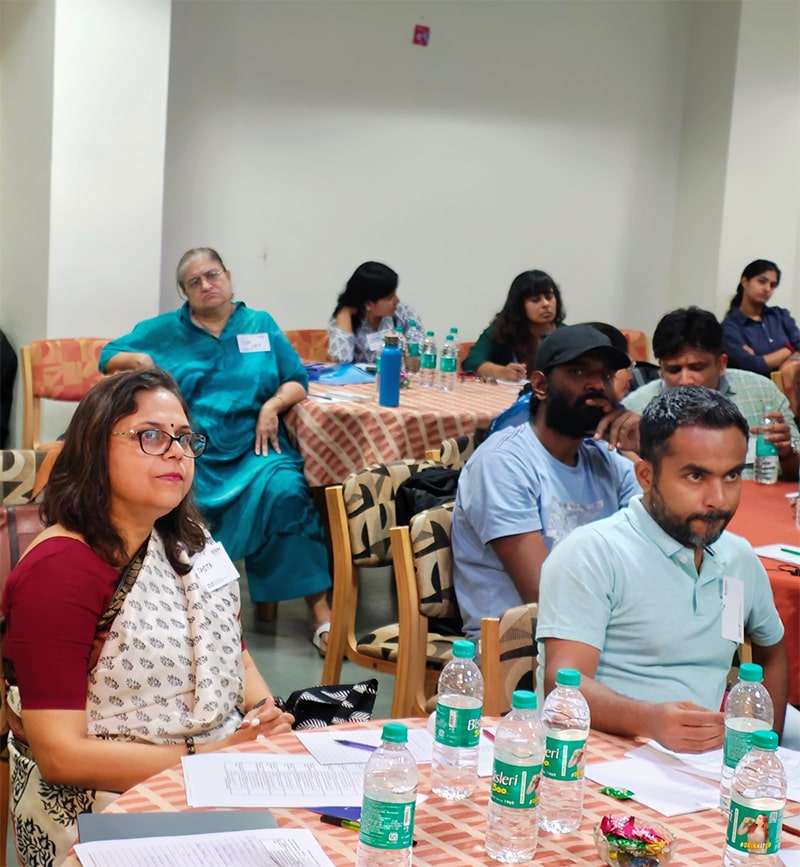
The panellists shared their stories and insights on how their support has driven impact in the social sector. “We work with nonprofits on how they can use their data more effectively. We focus on three things: what you should really be measuring; how you access available information; and, how you use it to make decisions,” remarked Kelkar.
The panel also offered recommendations for SPOs and enablers. The key takeaway from the discussion was that SPOs and enablers should focus on clearly defining the problem with adopting data-driven solutions. Both parties should prioritise listening and learning from each other for a more effective and collaborative approach to problem-solving.
Building a Community of Practice
The Code4Change event was ISDM CDSSI’s first hackathon, and a step towards building a community that wants to explore the potential of data science in the social sector. As Ravi Sreedharan, President and co-founder of ISDM, said, “We want to build a community of practice. When you build wisdom, it has to be done through a collective process. We want you to be part of that community of practice because that’s how we believe we’ll produce rich knowledge and useful frameworks for the social sector.” Swetha Prakash, CDSSI’s Centre Lead, reiterated this sentiment in her concluding remarks: “We want this to be the beginning of a community of practice and not the end.”
Going forward, CDSSI plans to keep engaging with the participants and audience members. The Centre also plans to organise a second hackathon from September 2024 onwards.


