

Encountering Awe-Inspiring Women
Passing through the lush greenery, we have reached the skill training centre in Chittaura block in Bahraich district (U.P.). After attending the orientation program conducted by NRLM, my friend and I went to a nearby village for fieldwork. Tajkhudai village has a significant and equal population of both Hindus and Muslims living in their respective mohallas near to each other. As the road was blocked due to the Eid procession, we had to take a detour – which meant passing through the heart of the Muslim based community. The news flashed in my mind which I heard three days back: a communal riot had happened in another village, Khaira bazaar when Hindus had Chatt pooja ceremonies. Our driver was driving so carefully through the roads, being mindful of the domestic goats seated in the middle of the path. Even a slight disturbance and we could be in trouble. I could feel the communal tension as we were driving through the narrow lanes.
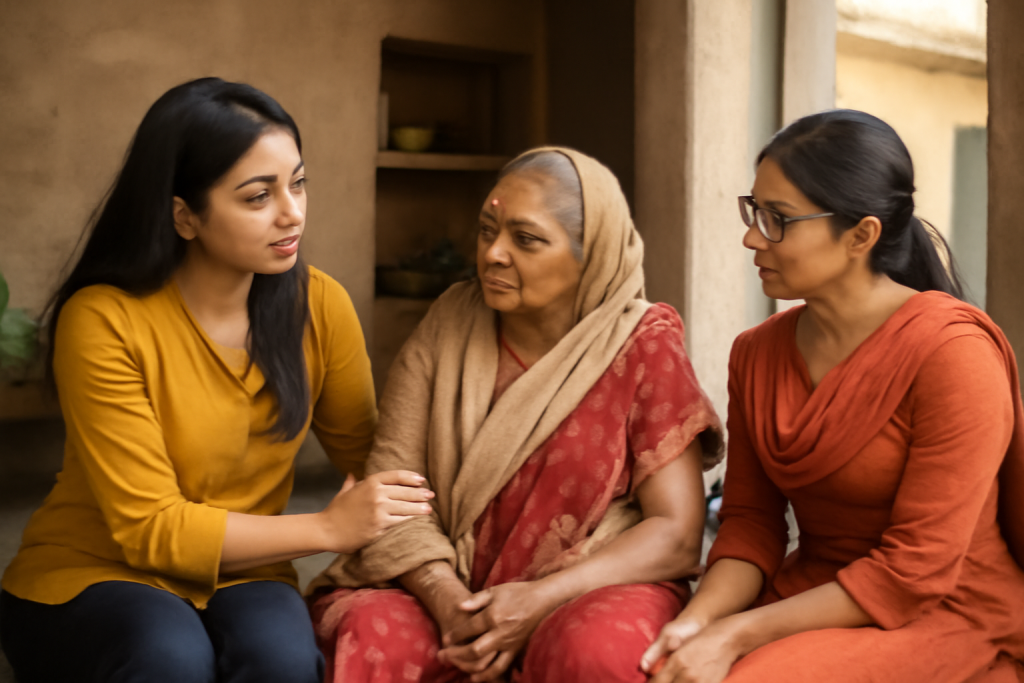
We reached the house where all the women were supposed to gather and have a meeting. The meeting went on for three hours and the work done by ICRP women was outstanding. The women who have risen from ashes were standing there and raising their voices against oppression and patriarchy, which was awe-inspiring. They were tremendously courageous in bringing women from the village together and empowering them. There were a couple of women who were pulled out of the meeting by their family members. All the while, the Eid procession with huge celebrations was going on intermittently.
The women who have risen from ashes were standing there and raising their voices against oppression and patriarchy.
After the skill training got completed, I was saying my goodbyes to all of them. A woman came out of the crowd. I said namaste, and as she was approaching me, she was trying to touch my hands but was reluctant. So, I slowly moved towards her. She softly said, “Aap madam bade sheher se ho. Mein gobar ka kaamkarti hu toh mein aapko choo nahi sakti… ( You madam have come from a big city. I work with cow-dung, so I cannot touch you…).”
And she backed away. I stood there frozen.
The people I was working with were calling out my name asking me to get into the jeep. I had to turn towards the vehicle, and when I looked back hoping to see her, she was not there.
“How am I any different from her?”, My conscience said.
“Is it just sheer luck that I am born with all the prerogatives, and she is not. How can one’s life get decided based on luck? How unfair is that? And I quibble sitting here in the mid of all my privilege that life is unfair.” Tears rolled down my cheeks.
The helplessness I have seen in her eyes still haunts me. I wish I could hug her. I wish I could tell her that we both are no different.
Understanding The Real Joy Of Being Together
Exhausted by my travel, I entered a house where I was supposed to stay. It had two tiny dimly- lit rooms. There were 10 people living under one roof. I felt apprehensive. In the back of my mind, I decided that I am gonna book a hotel room and leave by the night.
Sunita Yadav, whom we were working with in Bahraich is a woman of zeal, dedicates herself entirely for her social work on various issues along with having her own NGO. She has an inspiring life story of courage and determination. She has adopted five kids and has two kids of her own.
The whole bunch of kids in the house ran to me as I entered the room, randomly wishing me for my birthday with super glee on their faces. I felt so happy. I thought I would stay for the night and would leave the next morning.
The youngest kid of the lot, Ruhi, 21 months old is showered with enormous love and pampered by everyone. Her mother Renu, 25, lives in the home as well. One of the children Munni, pursuing her graduation wants to become an IAS officer and another kid Mouni, studying in 6th class wants to become a doctor. Their dreams are as big as their hearts.
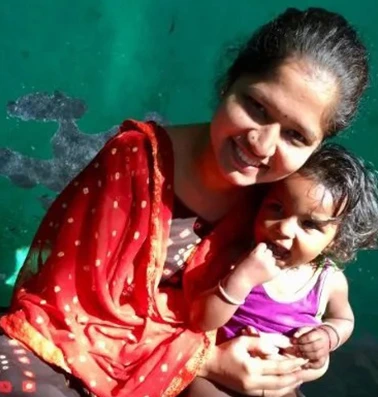
I felt content with a wide smile on my face I felt home.
It was lunchtime, and the movie ‘Mohabbatein’ was airing on TV. As Renu was feeding me morsels of food, we made every satirical joke possible whenever a romantic scene came up. Then, we all slept together in a line watching a horror show. Munni used to take care of my food timings and oil my hair saying, “You don’t take care of yourself at all didi. Let me do it.” The care and affection among these kids for each other is heartwarming.They as a family stand by each other, make sacrifices for each other despite all the adversities they have.
As I lean back on the wall and watch this family sharing pure laughter and happiness, it made me realise what Love is and how Inseparable it is. It took just a split second to capture the frame of this scene which has etched in my heart as a beautiful painting. I felt content with a wide smile on my face. It was a perfect ending for my birthday. I felt home.
Next three days were the most unforgettable days of my life. Every day we had meals together watching every possible saas-bahu serial and make fun of it. We watched a bunch of flop movies together; we played games together. Every night we slept together, and I hadn’t had such peaceful sleep in a very long time. There was a small pooja room where we used to light a diya in the evening.
The other day after completion of my work, Renu and I went out. After a long walk, we got into an open rickshaw, and as we were passing by a stall, Renu blurted, “Wait up here, I would bring Makai ke lava for you to eat, you will like it.” I did not know what it is so I said not to bring. The rickshaw driver voiced, “Madam, zindagi bas ek hi baar milti hain.. kha lijiye.” (Madam, we live only once, have it.)
Though it was a pretty cheesy line, it brought a smile on my face, and I told her to bring it. And indeed, they were really delicious.
The happiness on the kids’ faces when I got home bringing gifts for them was priceless; three days were over just like that. Living with these lovely people became a memorable experience of my lifetime. As I was leaving home thanking everyone, Munni hugged me and softly said, “Di, stop saying thank you so often. You are a part of our family now.”
These kids taught me: Happiness is in unconditional love. Joy is in being together. I feel rich leaving their home with all their sheer unconditional love. I feel richer being a part of their family. It was an absolute joy watching them and most importantly, living with them.
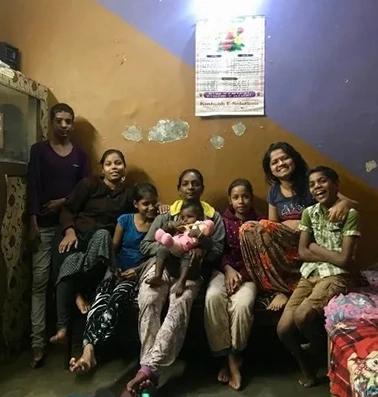
I felt content with a wide smile on my face I felt home.
Living with these lovely people became a memorable experience of my lifetime.
So here it is, I take pride in saying this is my clan, my beautiful clan!
About the Author:
Shruthi is a student of 2nd batch of PGP in Development Leadership at ISDM
Source: https://www.youthkiawaaz.com/2019/01/bahraich-ke-kisse-my-stories/


