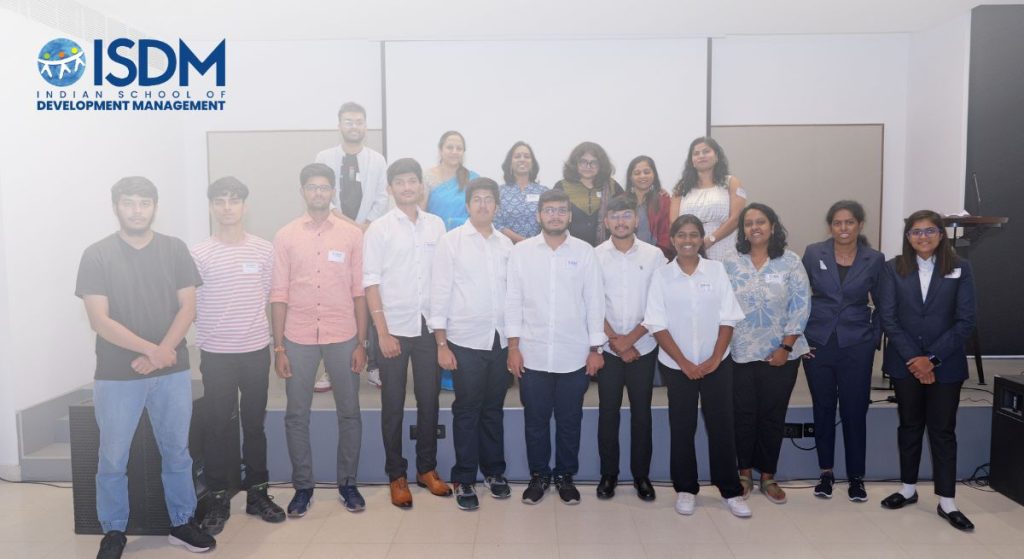
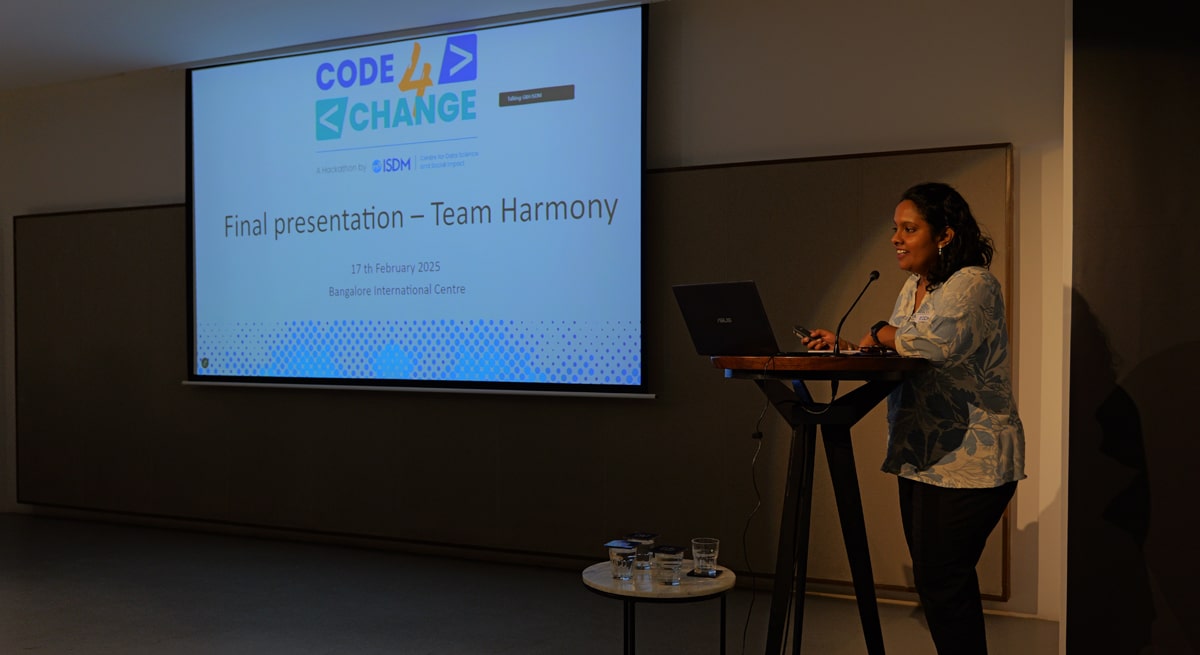
The second ISDM CDSSI Code4Change event, held on 17th February 2025 at Bangalore International Centre, crowned two winners!
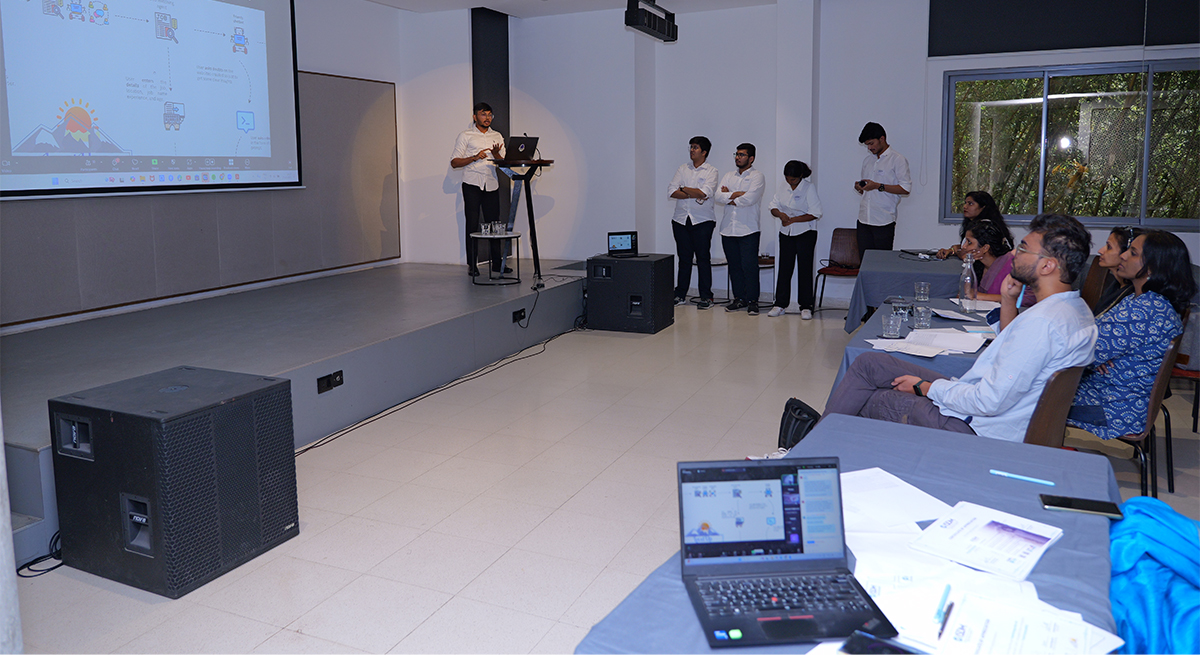
Six shortlisted solutions were judged by a panel of experts from the social sector and technology space. The jury included Chirag Singla (Founder and CTO, FIGR), Uthara Narayanan (Co-Founder, Buzz Women), Arati Krishnan (Head, Sattva IPN), Raman Kumar (Research Associate, ICTD Lab, IIT Delhi), Prashant Mehra (Co-Founder, Platform Commons) and Ravali Pidaparthi (Co-Founder and CEO, Esther Foundation).
For this edition of the social sector hackathon, CDSSI partnered with Common Ground – Living Landscapes, The CoRE Stack, Platform Commons, and Esther Foundation to co-create problem statements around two themes: youth employability and climate resilience.
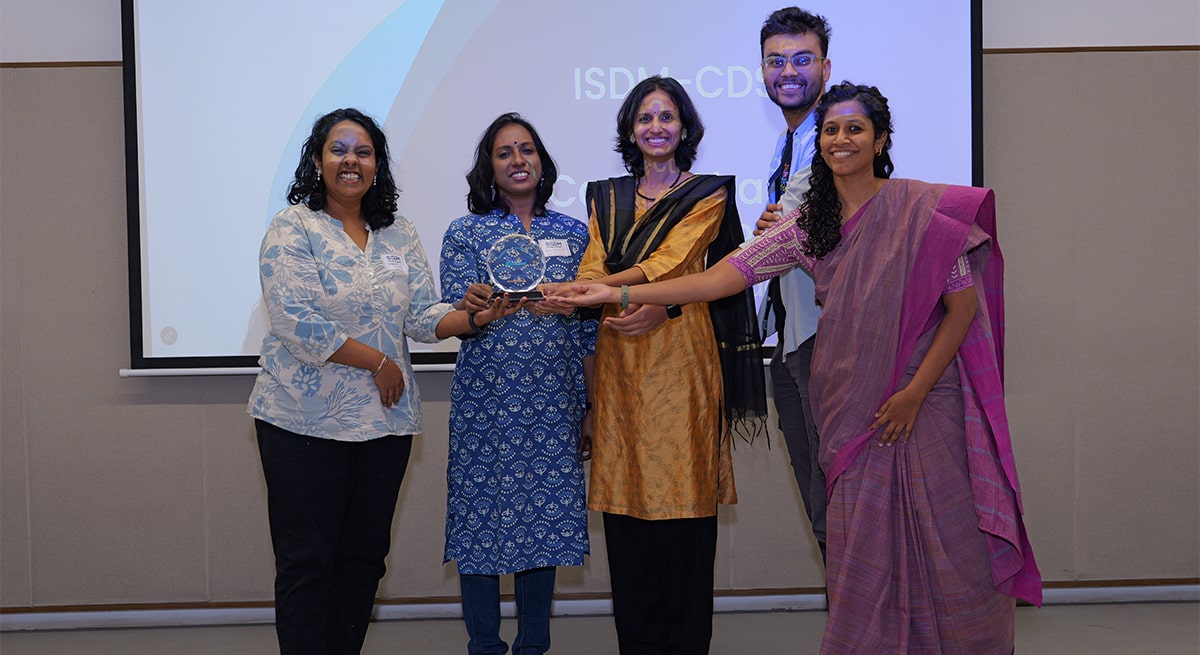
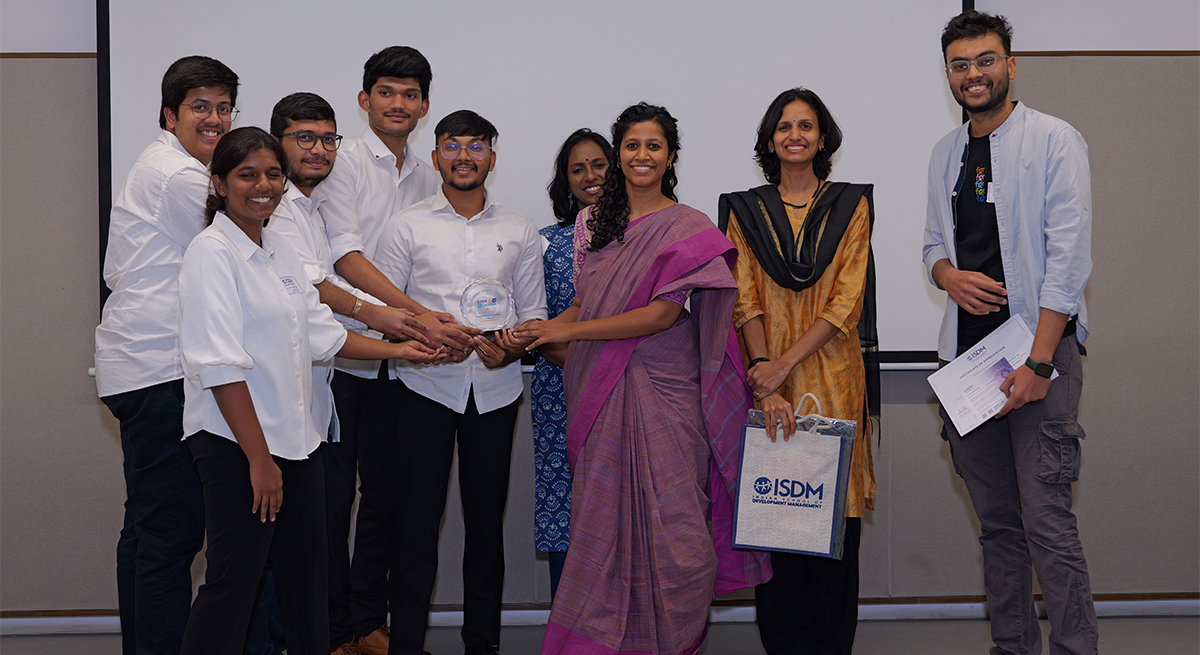
With two themes, there were two winning teams. Team Harmony, with Tara Rajendran and Veena Krishna, won for climate resilience. Team Level Up, with I V Srichandra, Pathange Omkareshwara Rao, Kavya Sakthivel, Srikar Vamsi Kottakki, and Harish Vijay Victor (from Amrita Vishwa Vidyapeetham, Coimbatore), was the winner for youth employability. In this interview, both the winning teams talk about their experience with this hackathon:
Why did you participate in the hackathon?
Team Harmony: We participated because this was a rare opportunity to work with real-world data alongside organisations that operate on the ground. Coming from an academic background, we are used to research staying in reports and papers. This was a chance to see the challenges firsthand and learn how to make data usable in real-world settings.
Team Level Up: We’ve been to three or four hackathons before, and we’ve won some of them. But those were more about building projects, not solving real-world problems. Code4Change is different. It is about contributing to society. We are in our third year at college, and we’re also looking for jobs, internships, and fellowships. The problems with job searching, such as unclear descriptions, irrelevant postings, fake listings – they were something we could relate to. If we, with our education and resources, struggle to find the right opportunities, what about those who don’t have access to the same networks?
What kind of use-cases do you see for your solution in the social sector?
Team Harmony: Our solution focuses on ecosystem classification. Right now, classifications are mostly based on landscape features, but they don’t account for local social and economic factors. We believe that bottom-up classifications, ones that include sociological processes, are crucial for designing interventions that actually work. A grassland may look the same in two different regions, but the way people interact with it varies. Solutions need to reflect that local context.
Team Level Up: Our project is designed for unemployed women in rural areas. The goal is to connect them with NGOs and local employers based on their skills and education level. Security is a key aspect, so users can safely interact with employers in their own communities. This way, job opportunities don’t just stay on platforms – they reach the people who need them the most.
What did you learn from the hackathon?
Team Harmony: One key learning for us was improving our skills in Google Earth Engine. We had taken a course on it before, but we had never applied it in a real-world scenario. Working on this problem gave us the hands-on experience we needed to see how it can be used practically.
Team Level Up: We are AI students, so we know how to work with data. But this hackathon taught us how to analyse it properly. We didn’t just run models – we had to find patterns, understand them, and then use those insights to refine our approach. That was something new for us.
What are your thoughts on Code4Change?
Team Harmony: We really liked the name – it captures what the hackathon is about. The problem statements were all real and relevant, and the platform gave us exposure to the kinds of challenges organisations are dealing with. The jury panel was fantastic. They asked tough questions, which was helpful because when you’re working on a solution, you can get caught up in details and forget the bigger picture.
Team Level Up: This hackathon was different from others because it focused on real-world implementation. It’s not just about building something and moving on – the goal is to create something that can actually be used. We think more people from different backgrounds should participate. When data scientists, social workers, and policymakers come together, they can create innovative solutions that wouldn’t happen otherwise. It’s a win-win for everyone.
Code4Change is a bi-annual social sector hackathon conducted by ISDM CDSSI.
Learn more about the hackathon here: https://www.isdm.org.in/cdssi/projects/code4change


