

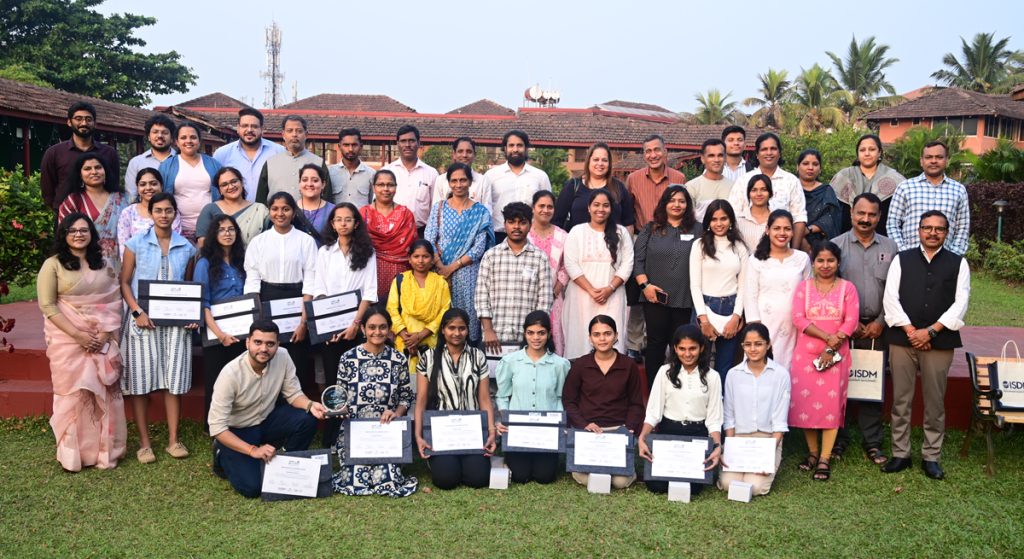
Participants from the third edition of Code4Change reflect on working with real-world justice system challenges and what it took to build meaningful solutions
The Final Showcase of the third edition of Code4Change was held on 16 January 2026 at the International Centre Goa (ICG). The hackathon, organised by the Centre for Data Science and Social Impact (CDSSI) at ISDM, in partnership with DAKSH and the Centre for Social Sensitivity and Action (CSSA), Goa Institute of Management, centred on a single question: How can data improve access to justice in India?
Over several weeks, participants worked on one of two problem statements: reimagining the National Judicial Data Grid (NJDG) and designing fair case-scheduling systems. What emerged were thoughtful attempts to engage with a complex public system.
Six shortlisted teams from across India presented their work at the showcase: Team Nyayadrishti (Tejaswini Ponnada, Keerthana Ramesh Velan, Manya Sinha, Swanditha Lingareddy), Team Lawgorithm (Archita Narayan Sahoo, Shubham Sharma, Nandini Singh, Harshini Akana, Sruthi Saravanan), Team NyayaMitra (Neha Shinge, Sneha Bhandari, Pratiksha Solat, Shraddha Takmoge, Pratiksha Mahajan), Aalekh Roy, Team Piethagor (Amaresh Chitrakavi), and Team DataDiviners (Thanuj Kumar Maligi and Arshiya Khan).
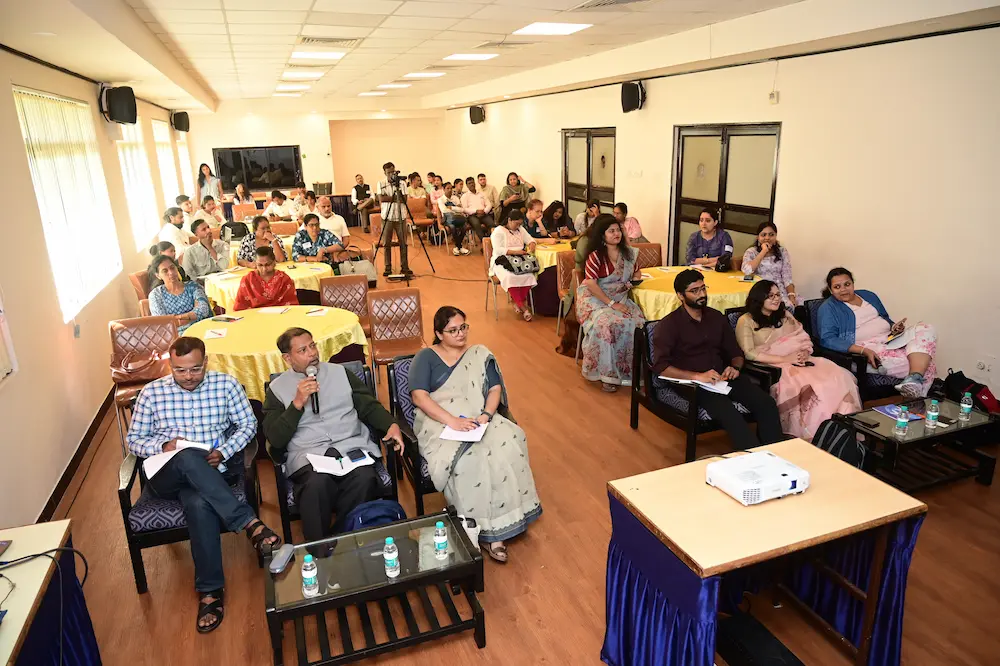
Their solutions were evaluated by a panel comprising Dr Chittaranjan Hota (Senior Professor, Computer Science, BITS Pilani, Hyderabad), Nivedita Krishna (Founder, Pacta), Prof. Prakash Singh (Associate Professor, CSSA, Goa Institute of Management), Smita Mutt (Strategic Initiatives Lead, DAKSH), Atishya Kumar (Senior Research Associate, DAKSH), and Rohith C H (Data Analyst, DAKSH).
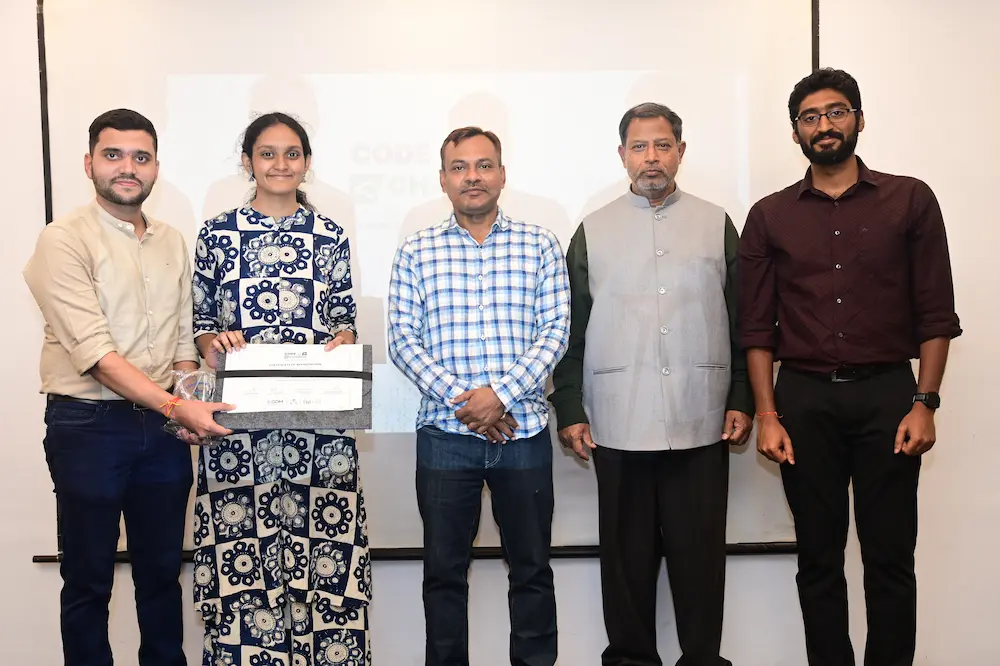
The hackathon had two winners, one for each problem statement: Team Lawgorithm and Aalekh Roy. But beyond the final outcomes, what stood out was how participants approached the challenge itself. Their thoughts reveal what it takes to work on real-world systems, where data, context, and constraints – they all matter:
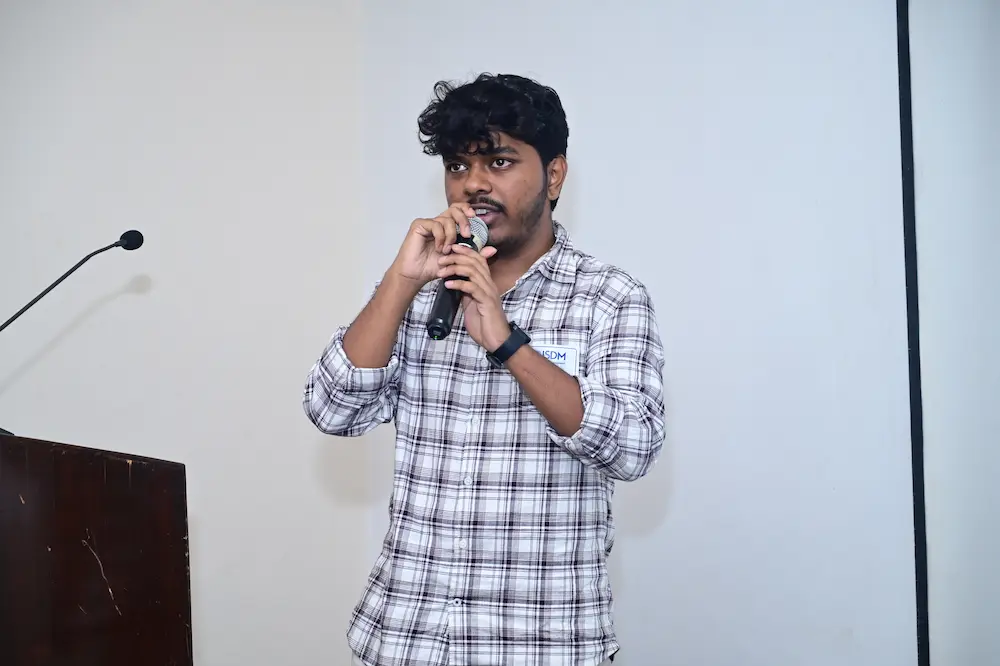
Why did they join Code4Change?
Participants were drawn in by the chance to work on something real and meaningful. For many, this was a break from routine academic or professional work. “It felt like a rare opportunity to contribute to a socially impactful challenge beyond typical college-level projects,” said Tanuj Kumar Maligi (Team DataDiviners).
Others saw it as a way to apply their skills beyond traditional use cases. Amaresh Chitrakavi (Team Piethagor) shared that the idea of working on a pressing social issue, while using technology for good, was a strong motivator.
Why did the problem statements resonate?
As participants engaged with the problem statements, they found that the challenge extended beyond code and into systems. The technical and operational complexity of the problems stood out to them. “You had to think about optimisation under constraints. Every domain brings its own realities, and you have to work within them,” said Aalekh Roy.
For many, this meant understanding how systems like the National Judicial Data Grid function in practice. Working on such platforms raised questions about transparency, efficiency, and how technology could support better functioning of public institutions.
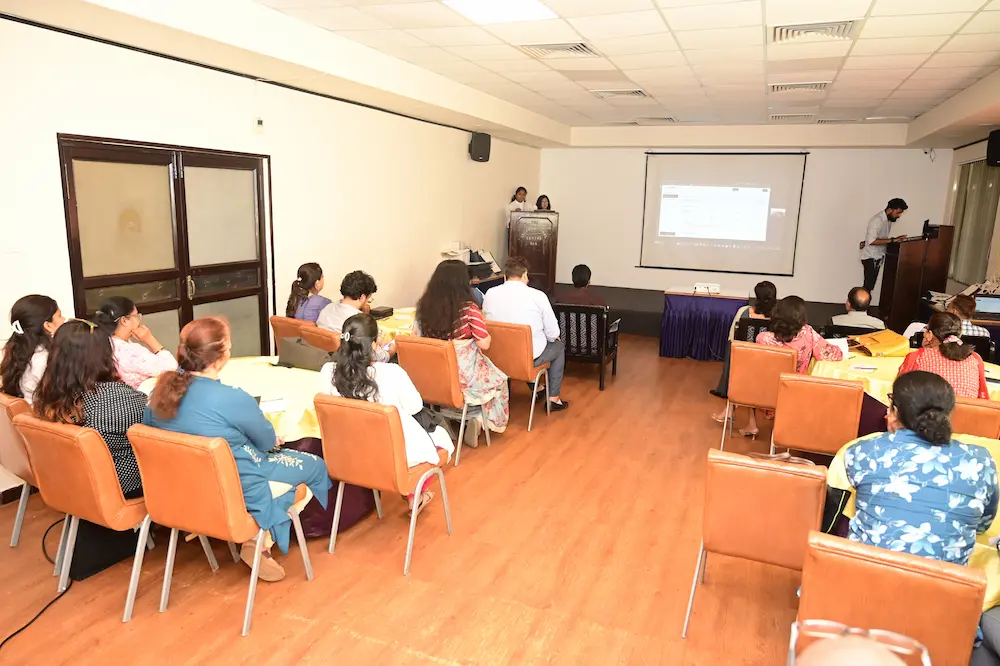
What did it take to build these solutions?
For the participants, the first challenge was understanding the domain itself. Most teams came from engineering or data science backgrounds and had limited exposure to how the judicial system works. This meant investing time in understanding the structure of courts, the nature of case flows, and how judicial data is recorded and used. “We had to first understand how the judicial system works. That was overwhelming at the beginning, but it became our biggest learning,” said Neha Shinge (Team NyayaMitra).
Participants also had to grapple with the limitations of real-world datasets. Teams encountered incomplete records, inconsistencies, and potential biases in the available data. Working within a limited timeline required teams to prioritise, collaborate closely, and make quick decisions about their solutions.
What impact can these solutions have?
Some teams focused on making data more usable. One team shared that their dashboard was designed to be simple, personal, and actionable, helping users move from raw data to clear insights without overwhelming them.
Others addressed systemic inefficiencies, and how data models could address operational challenges such as scheduling inefficiencies and case backlogs. At the same time, participants were mindful of real-world deployment. Many saw their work as proof-of-concept ideas that demonstrate possibilities, rather than immediate large-scale solutions.
What did participants learn?
Across teams, one theme stood out: working on real-world problems is very different from working on typical technical projects. Participants realised that solving such challenges requires understanding the system in which the data exists, along with the people and processes involved.
Participants also became more aware of the nature of data itself. “Data is never neutral. It carries biases in how it is designed, collected, and interpreted,” said Team Lawgorithm.
The experience also showed that meaningful solutions require depth. Teams noted that addressing social sector challenges is rarely about quick technical ideas. It requires careful engagement with the problem, the data, and the broader system.
Would they recommend Code4Change?
The answer was consistent across participants: yes.
“It’s a great platform to learn, collaborate, and understand how technical solutions can contribute to public systems like justice delivery,” said Tanuj Kumar Maligi.
It was also seen as accessible to newcomers. “Even for someone new to hackathons, it provides a supportive environment to experiment and grow,” said Shraddha Takmoge (Team NyayaMitra).


