
Digital Open Solutions For Social Impact

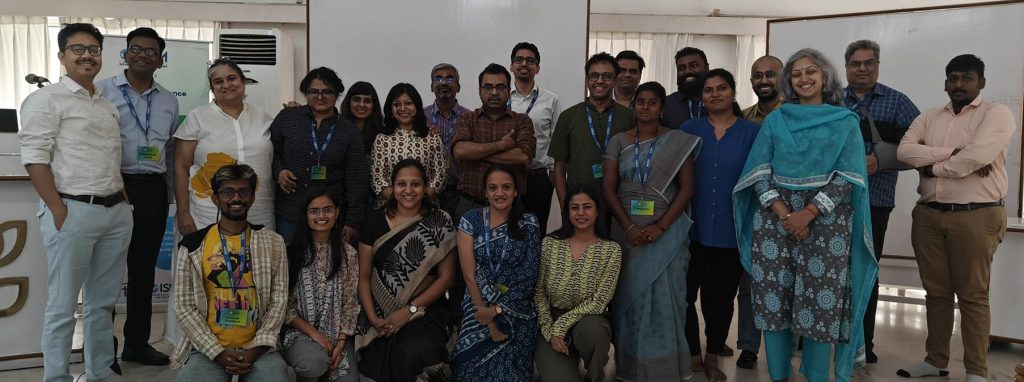
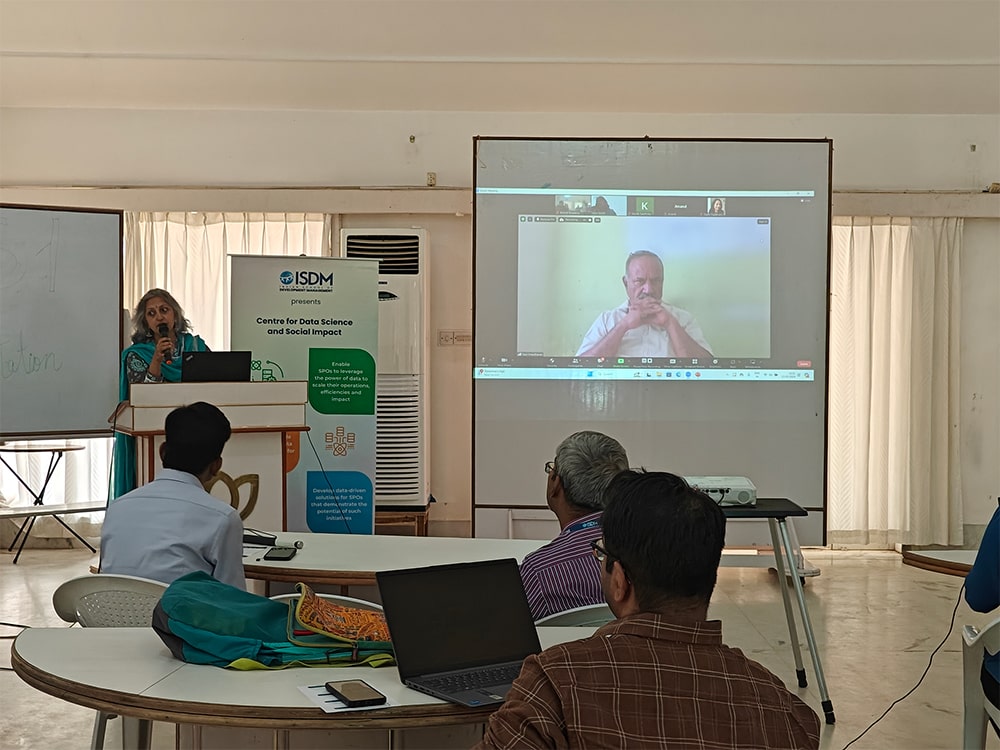
The ISDM CDSSI Fellowship 2024-25: Digital Open Solutions (DOS) for Social Impact welcomed the first cohort of six fellow teams on Mar 15, 2024, at an orientation held at The School of Ancient Wisdom in Bengaluru. The closed-door, hybrid event was attended by over 35 individuals, including Fellow teams, mentors, and key stakeholders from ISDM.

A Fellowship for social good

The first cohort of the ISDM CDSSI Fellowship presented their projects at an orientation held in Bengaluru

CDSSI welcomed its first cohort of six fellow teams on March 15, 2024, at an orientation held at The School of Ancient Wisdom in Bengaluru. This event marked the inauguration of the ISDM CDSSI Fellowship 2024-25: Digital Open Solutions (DOS) for Social Impact. The closed-door, hybrid event was attended by over 35 individuals, including Fellow teams, mentors, and key stakeholders from ISDM

The Fellowship was conceived as a way to promote the development of open-access technologies and their use in the social sector. It aims to work towards removing the roadblocks in the use of data and technology use in the development sector. In the words of Ravi Sreedharan, President and co-founder of ISDM, “We are underestimating the leverage that social sector organisations can get if we are able to make systemic changes. The work that all of us are doing in this room is all going to build that ecosystem.”

Co-creating Impactful Solutions

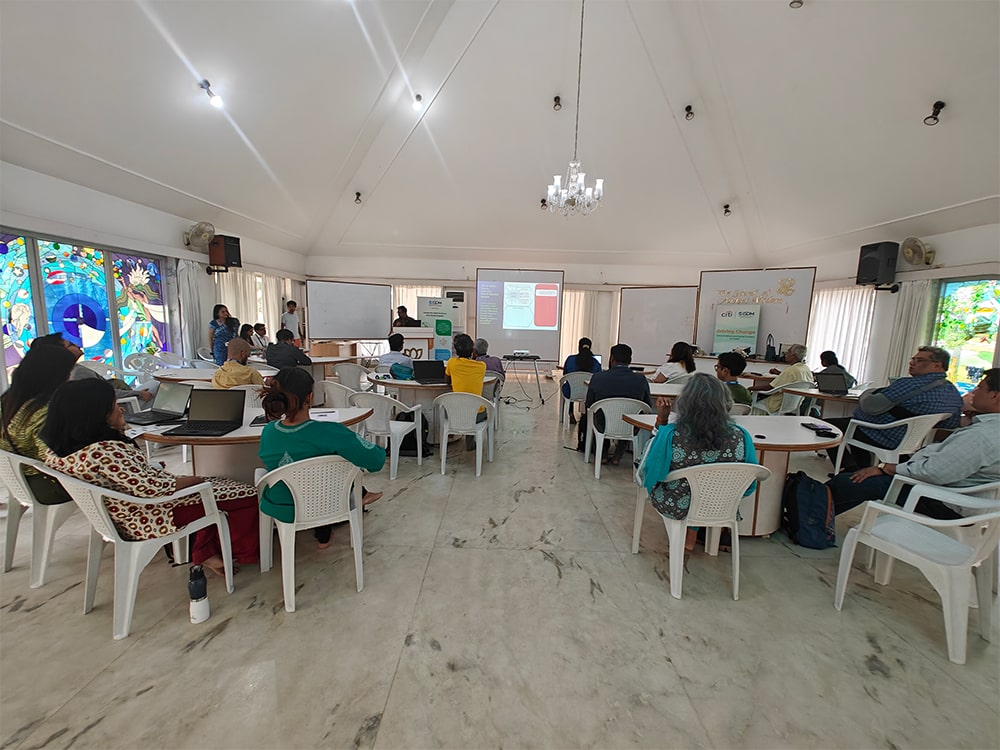
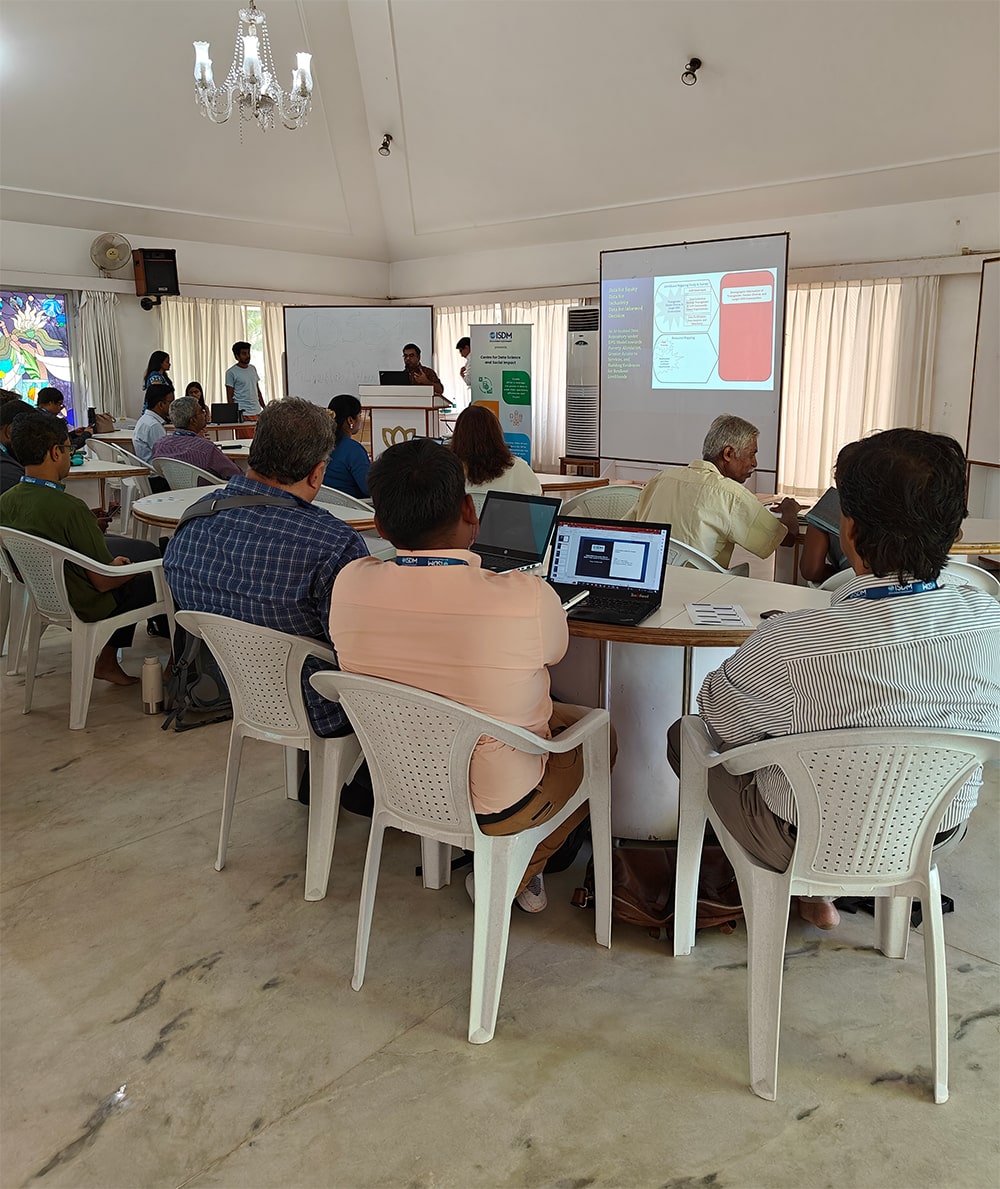
During this 12-month Fellowship, the Fellow teams will undertake projects aimed at creating DOS designed to cater to the specific requirements of SPOs. These DOS will be widely accessible to the general public and to individuals, organisations, and other stakeholders within the larger development sector. During the orientation event, the Fellowship teams shared the details of their projects.
  • Ashim Tuli and his team will be working on “Augmentation Models for Informal Workers”, where they will develop an AI model to improve workers’ income in the informal sector. This application will model the complex interdependencies between socioeconomic factors and income-improvement interventions, along with their effects on real income.
  • The next project is grounded in addressing the historical exclusion and societal prejudices faced by India’s transgender, gender-diverse, and larger Gender and Sexual Minority (GSM) communities. PROJECT TRANSParent, led by Avinaba Dutta, aims to create an open, accessible, transparent, and AI-enabled data repository or dataset for transgender and GSM demographic data.
  • With extensive experience in documenting and disseminating traditional agricultural knowledge, grassroots technology, and farmers’ innovations, P. Vivekanandan will be driving “SEVA: Sustainable Livestock Production App”. The team will be working on an AI and NLP-based chatbot application that provides digital access to livestock disease treatment using traditional herbal medicine through a voice-assisted interface.
  • Yashwin Iddya and his team want various stakeholders such as government, Civil Society Organisations (CSOs), and Self Help Groups (SHGs) to see how vulnerable the communities they work with are, test interventions, simulate shocks, and plan for resilience, through their project “E-QLT: A Social Security Simulation Platform”.
  • To revolutionise the paediatric healthcare landscape, particularly the comprehensive growth monitoring and nutritional management of children, Nilashis Roy and his team will create a mobile application for the detection of malnutrition called “MAAP: Malnutrition Assessment and Action Plan”.
  • Karthik Sawhney heads the final entry in the fellowship projects, a platform titled “NClude”. It is an LLM-powered information access and recommendations chatbot for the blind and low-vision community.

Addressing Social Challenges Through Data Science

The objective of the CDSSI Fellowship for data science practitioners in the social sector is to encourage the application of data science to address social challenges, offer actionable insights, optimise interventions, and enhance decision-making. Recognising the importance of addressing these challenges and acknowledging the dearth of data science talent in the social sector, the Fellowship acts as a platform for data science professionals to contribute to this sector.

CDSSI plans to keep working towards making open-access data and technology solutions available to organisations in the development sector by conducting a yearly Fellowship.
Author(s) :

ISDM CDSSI

Contact Author : cdssi@isdm.org.in
Yes

Get in touch with authors

No ratings yet

Rate this article

Yes

Key topics

Data Science for social impact, Environmental Sustainability and Climate Action, Health and Wellbeing, Livelihood, Financial Inclusion, and Economic Empowerment, Mental Health and Disability Inclusion, Rural Development and Agriculture

Also found in

Share

Join Our Newsletter

Explore More Articles

Paper / Report

Rethinking Impact: From Metrics to Meaning – Convening Report

How do we move beyond measuring impact as a reporting requirement to using it as a tool for learning, decision-making, and long-term change? This report captures the key discussions, insights, and emerging ideas from Rethinking Impact: From Metrics to Meaning, a convening that brought together funders, practitioners, researchers, evaluators, and development professionals to examine the future of impact measurement in India. Anchored around the launch of the Rural Development Impact Framework (RDIF) and the Development Management–Social Impact Measurement and Management (DM-SIMM) approach, the convening explored how the sector can better understand contribution, centre community perspectives, align funding with the realities of social change, and create measurement practices that support learning over compliance. The report synthesises the conversations, key takeaways, and actions that can help build a more thoughtful and effective approach to understanding impact.
Blog

Development Management: Genesis, Rationale, and the Foundations of an Emerging Discipline

Development Management (DM) arises at a junction that neither development studies nor mainstream management fully occupies on its own. Development thinking has traditionally concerned itself with what change is desirable and for whom, while management thinking has concerned itself with how collective effort gets organised and executed.
Paper / Report

A Methodological Framework for Assessing the Long-Term Impact of a Nonprofit’s Work in a Geography

This report presents the Rural Development Impact Framework (RDIF), a methodological approach for assessing the long-term impact of nonprofit organisations working within a geography. Drawing on realist evaluation, the framework shifts the focus from short-term, project-level attribution to understanding how sustained organisational engagement contributes to social change over time. Using PRADAN’s work in Gumla (Jharkhand) and Dhamtari (Chhattisgarh) as case studies, the research combines qualitative, quantitative, and geospatial methods to examine how interventions interact with local contexts to generate change. The study demonstrates that long-term impact emerges through the cumulative strengthening of livelihoods, institutions, collective agency, and governance systems, offering a practical framework for evaluating organisational contribution to rural transformation.
Paper / Report

DM-SIMM: A Funder’s Guide to Reflect, Learn, and Act on Social Impact

Across the social sector, impact measurement is often reduced to reporting numbers, meeting donor requirements, and proving results. In the process, opportunities for learning, adaptation, and meaningful decision-making are frequently lost. This guide explores how funders can rethink Social Impact Measurement and Management (SIMM) to prioritise continuous learning over compliance. Drawing on research, practitioner insights, and real-world examples, it offers practical ways to make measurement more useful, participatory, and responsive to the realities of implementation. The guide highlights the critical role of funders in shaping incentives, creating space for reflection, and enabling organisations to act on evidence. Ultimately, it presents a vision of impact practice that helps organisations learn, adapt, and stay focused on the change they seek to create.
We use essential and analytics cookies to operate this website and understand how visitors interact with it. As this site also functions as a login identity provider (IDP) for other ISDM portals, some cookies are necessary to enable secure authentication. By continuing to use this site, you consent to our use of cookies.