

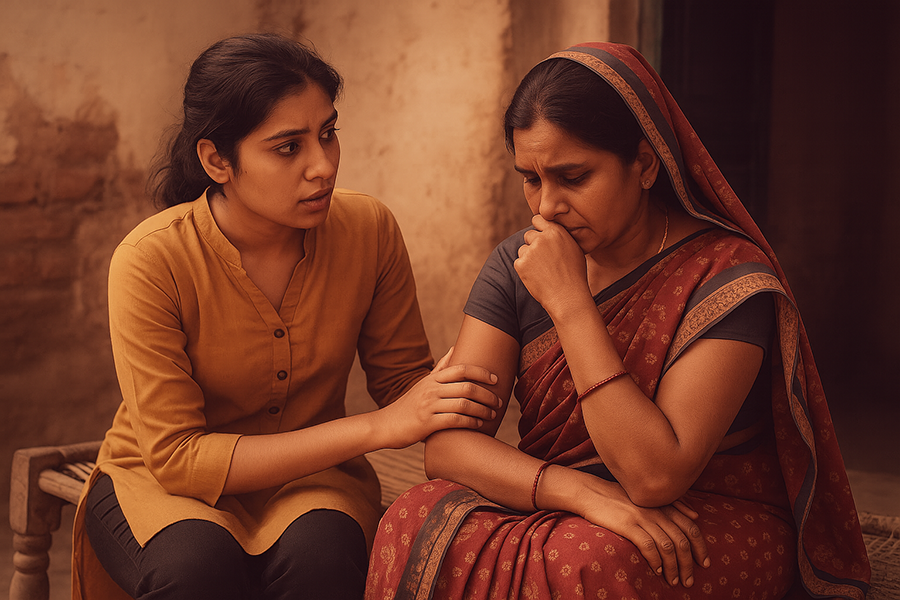
In the vast tapestry of India, beneath the surface of its rich cultural diversity and vibrant traditions, lies a dark and distressing phenomenon known as the ‘Paro System’. This system, prevalent in Northern India, reveals a harrowing reality of women trafficking, raising questions about gender-based violence, exploitation, and societal indifference. In this exploration, we delve into the intricacies of the “Paro System,” shedding light on its origins, impact, and the urgent need for collective action, all while considering the context of ‘Realising India’.
This blog section unfolds the layers of the ‘Paro System’, providing insights into its historical roots, the systemic issues that sustain it, and the tragic fate of women caught in its web. As we navigate through the narratives of those affected, we confront the chilling reality of gender-based violence and the apathy that perpetuates this egregious practice. Additionally, we reflect on the role of institutions like the Indian School of Development Management (ISDM) in shaping compassionate leaders capable of dismantling such deeply rooted injustices.
The Shocking Reality Unfolds
Unexpected Encounter at Nangravaleiya Dhani
In the heart of Northern India, the unsettling truth of women trafficking reveals itself through the ‘Paro System’. During a session of ‘Realising India’, I found myself in a self-help-group gathering at Nangravaleiya Dhani, a remote hamlet in Rajasthan. What unfolded was a revelation as a woman, breastfeeding her 2-year-old, pointed towards another lady, saying, “Bhaiya, wo bhi Bangalan hai! Kalkatta se aayi hai!” This encounter marked the beginning of an exploration into the plight of women brought to these regions under the ‘Paro System.’
Unraveling the Enigma of ‘Paro’ – Yamuna ke us paar
The term ‘Paro’ translates to ‘Yamuna ke us paar’ (from across the Yamuna). These women, often from states like Assam, West Bengal, Bihar, and Andhra Pradesh, are brought to villages in Northern India, particularly Rajasthan, after marriage. The system is a response to the challenge of finding local brides due to the skewed sex ratio in the region.
Delving into Systemic Issues
The ‘Paro System’ is a complex web woven from attitudes towards women, female feticide, economic poverty, and the increasing demand for manual labor in agriculture. Dr. Virendra Vidrohi, founder of Matsya Mewat Shiksha Evam Vikas Sansthan, notes that this system satisfies both the reproductive needs of men and the labor needs of families.
Historical Roots of the Disturbing Practice
The roots of this sinister practice trace back to the late 70s when the surge in transport industries led males from communities like Meo and Gujjar to visit states like Bengal, Bihar, Jharkhand, and Assam. These interactions laid the foundation for female trafficking rackets that supplied brides to Rajasthan. The demand arose from families unable to afford dowries for local brides.
The Alarming Trafficking Hub
Mr. Ram Roop, a Police Inspector with the Anti-Human Trafficking Unit, Alwar, identifies the district as a hub market for cross-region brides. The brides are often trafficked from poor families who remain unaware of their daughters’ fate. Even khap panchayats, traditional village councils, accept the practice due to the drastic decline in the sex ratio.
The Tragic Fate of Trafficked Women
The women trafficked under the ‘Paro System’ become victims of egregious human rights violations, including child marriage, trafficking, kidnapping, abuse, child labor, marital rape, rape outside marriage, daily violence, lack of freedom in decision-making, and being treated like slaves within their families. They are sold multiple times and, in some cases, forced into commercial sexual exploitation.
Reflecting on the Cold Indifference
The chilling reality of the ‘Paro System’ prompts introspection into our collective silence regarding gender-based violence. Cases like my childhood friend Buri, forced into marriage at 14, highlight the human cost of our indifference towards gender inequality and the objectification of women. As we ponder, we must ask ourselves, “Where could she be? Is she still alive?”
Confronting Gender-Based Violence
The normalization of gender-based violence in our society necessitates a shift in perspective. Beyond research and statistics, a moment of self-reflection reveals how we have tacitly accepted gender-based violence. The ‘Paro System’ serves as a stark reminder of our collective failure to address this pervasive issue.
Nero’s Guests and Our Collective Responsibility
In contemplating those who remain indifferent to the suffering of others, the question arises, “What would you call people who feast on fruits, wine, and other exotic dishes while their fellow beings were torched to death in their presence to facilitate their luxuries?” The response is clear – they are ‘Nero’s guests’. The reference to Nero’s guests serves as a metaphor for our shared responsibility to confront and eradicate the ‘Paro System’ and the gender-based violence it represents.
As we grapple with the disturbing implications of this system, ISDM emerges as a beacon of hope. By shaping leaders who understand the complexities of societal challenges, ISDM empowers change agents to confront and dismantle systems that perpetuate injustice. Let us join hands in building a future where the ‘Paro System’ becomes a thing of the past, and every individual is treated with dignity and equality.


