


Ecosystem Study: Benchmarking talent management in Indian social sector

The study on Benchmarking Talent Management in Indian Social Sector, seeks to understand how the Social Impact Sector approaches ‘talent’ and ‘compensation’ to help key stakeholder groups address the challenges around organisational talent. The research aims to examine ‘what is’ in terms of the current talent management practices in the sector and attempts to lay the foundations of ‘what it ought to be’ in terms of the principles or norms that need to be developed for the emerging sectoral ecosystem.The…

The study on Benchmarking Talent Management in Indian Social Sector, seeks to understand how the Social Impact Sector approaches ‘talent’ and ‘compensation’ to help key stakeholder groups address the challenges around organisational talent. The research aims to examine ‘what is’ in terms of the current talent management practices in the sector and attempts to lay the foundations of ‘what it ought to be’ in terms of the principles or norms that need to be developed for the emerging sectoral ecosystem.
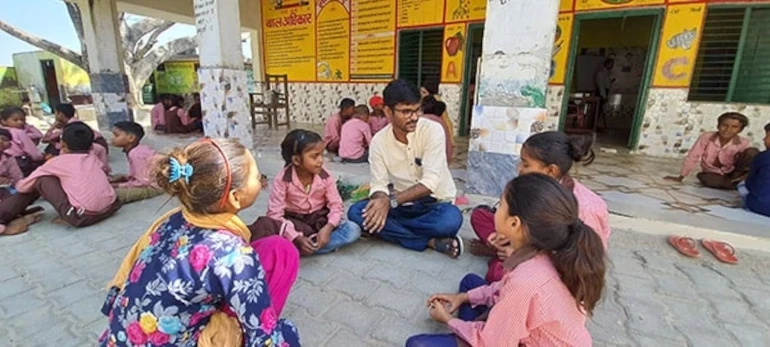
  • The study will enable leaders in the Indian Social Sector to build strategies conducive to the talent management needs of their organisations.
  • Findings will include compensation benchmarking with reliable data on compensation trends for different roles across organisational archetypes, geographies, and thematic areas of engagement.
  • The study report will facilitate the emergence of a professional, data-informed, and transparent ecosystem of knowledge commons on talent management for the Indian Social Sector.
  • The study will enable social purpose organisations, philanthropists, foundations to create a conducive environment to attract, nurture and grow appropriate talent in the Indian Social Sector.
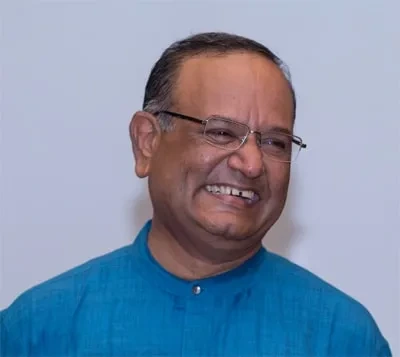
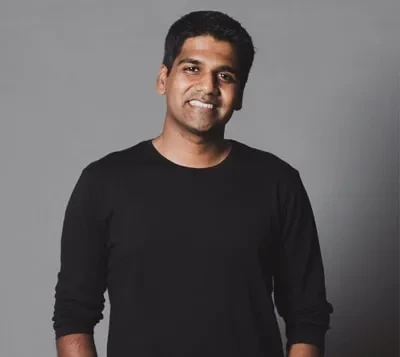
Mr. Ravi Sreedharan, Co-Founder and PresidentISDM, shares “ISDM is thrilled at the initiation of the first-ever attempt to build a shared knowledge infrastructure on Talent Management in the sector. 

This study is vital for the social impact sector to establish and have access to knowledge commons that guide and inform management practices in SPOs. There is an urgent and underlined need for greater synergies in the way that a sector as wide and disparate as the social impact space understands and works on managing its most vital capital. We are sure that the compensation database and knowledge resources that the study makes available will be of immediate and long-term use to thousands of SPOs all of whom are grappling with managing and retaining talent in the present crises where funds run low, but our work needs greater impact.

The scope of the study extends to the entire landscape of Indian Social sector including Civil Society Organisations/NGOs and Philanthropic Foundations and a range of other types of organisations such as Social Enterprises, Impact Investment Firms, CSR arms of Corporates, Consultancy Organisations, think tanks, support service providers and the likes.

Speaking of the study, Ajit Sivaram, Co-founder (U&I) said, “How does one create an equitable format in compensation? Even if I

try, it means going and researching another 20 pay scales and again, where do I find them? So really, your study is the answer to our prayers. We are glad someone is doing the hard work and we can sit back and enjoy the ride!”

In the past decade the sector has witnessed a surge in demand for a variety of skill-sets, an influx of cross-over talent from other sectors, heightened competition for talent as well as new expectations and benchmarks around compensation in particular. The benchmarking exercise shall provide a set of actionable recommendations along with a searchable database for job roles and compensation for key sector stakeholders.

“Somewhere this(social) sector is considered as a bunch of do-gooders and not necessarily a vast pool of highly qualified professionals. Various entities in the sector were individually spending double digit lakhs in compensation benchmarking studies when really, we should be able to count on a sector resource.  University.

That was the impulse that guided ISDM and us (CSIP) to create what is in effect a public good for the sector. The study also helps showcase the width and the range of talents that the sector today houses and is increasingly looking for in terms of skill sets.” – Ingrid Srinath, Director – Centre for Social Impact and Philanthropy (CSIP), Ashoka

This study is a joint initiative of Indian School of Development Management (ISDM) and Centre for Social Impact and Philanthropy (CSIP). KornFerry and Sattva Consulting are execution partners of the study.

Each participating organisation shall also receive:

  • An ‘internal equity and external competitiveness’ report specific to their organisation.
  • An opportunity to contribute their organisation’s experience to the series of case studies on ‘drivers of talent’ in the Indian Social sector

If your organisation would like to participate in the study, please register here: https://bit.ly/2UfPxpY

To know more about the study, see:Talent Management in Indian Social Sector | ISDM

Scan to participate:

Author(s) :

Priti Dargad and Leena Sushant

Yes

Get in touch with authors

No ratings yet

Rate this article

Yes

Key topics

Education and Skill Development, Social Justice, Philanthropy and Human Rights

Also found in

Share

Join Our Newsletter

Explore More Articles

Book

AI Systems for Social Good Playbook

This playbook serves as your step-by-step guide for designing responsible AI and data analytics solutions in the social sector. It guides both technical and non-technical teams through real-world projects, from understanding your context to monitoring your model post-deployment. Rooted in field-tested work, it aims to make AI more accessible, ethical, and impactful.
Case Study

Powering Asia’s Philanthropy Boom: Why Investing in Talent and Capacity Matters Now

In this blog written for WINGS, ISDM — a WINGS member and contributor to the APAC working group — makes the case that Asia’s philanthropy boom can only deliver lasting impact if investment in talent and institutional capacity keeps pace with growing capital. Drawing on India’s experience, it highlights gaps in governance, compensation, and leadership pipelines, and calls on donors and ecosystem enablers to treat capacity-building as a core strategy, not an overhead.
Blog

Code4Change a great platform to learn, collaborate, and understand how technical solutions can contribute to public systems like justice delivery

Participants from the third edition of Code4Change reflect on working with real-world justice system challenges and what it took to build meaningful solutions The Final Showcase of the third edition of Code4Change was held on 16 January 2026 at the International Centre Goa (ICG). The hackathon, organised by the Centre for Data Science and Social Impact (CDSSI) at ISDM, in partnership with DAKSH and the Centre for Social Sensitivity and Action (CSSA), Goa Institute of Management, centred on a single…
Case Study

The AI Platform Ending Pay Uncertainty in the Informal Sector

Kanak AI uses machine learning on real-world training data to predict income potential and recommend targeted upskilling courses, empowering job seekers to negotiate fair wages and build stable careers. Azad Ahmad (25), works as a Data Entry Operator in Gurgaon. He earns enough to support his family and sponsor his parent’s healthcare needs.. But it wasn’t always so. In 2021, when he graduated with a Bachelor’s degree, the COVID-19 pandemic was still raging, and he found himself navigating a tenuous…
We use essential and analytics cookies to operate this website and understand how visitors interact with it. As this site also functions as a login identity provider (IDP) for other ISDM portals, some cookies are necessary to enable secure authentication. By continuing to use this site, you consent to our use of cookies.